Best Pickleball Paddles for Women (2026)
The JOOLA SCORPEUS Heat Vision (about $100, 7.8 ounces) is the best all-around pick for women who want a light, forgiving paddle with real pop, backed by a genuinely lighter beginner option and a still-light expert paddle above it.

The JOOLA SCORPEUS Heat Vision costs about $100, weighs 7.8 ounces, and pairs a carbon fiber face with a 16mm polymer honeycomb core, so it stays light while adding more pop than a beginner paddle without punishing your arm. This is the paddle most women outgrowing a starter paddle should land on.
7.8 oz listed · 16 mm core · standard shape · carbon fiber face
Beginner, intermediate and expert picks
Beginner
 Onix Z5 Graphite Carbon Fiber Pickleball Paddle with Cushion$29.99
The Onix Z5 Graphite with Cushion runs about $30 and weighs 7.85 ounces, which is light enough that a new player can rally for an hour without the paddle feeling like a chore. The cushioned handle helps if your hand tires fast. What you give up moving up a tier is a stiffer, more powerful carbon fiber face and a bigger sweet spot for shots you mis-hit off center.
Check priceIntermediate
JOOLA SCORPEUS Heat Vision 16mm Pickleball Paddle$99.95The JOOLA SCORPEUS Heat Vision costs about $100, weighs 7.8 ounces, and pairs a carbon fiber face with a 16mm polymer honeycomb core, so it stays light while adding more pop than a beginner paddle without punishing your arm. This is the paddle most women outgrowing a starter paddle should land on.
Check priceExpert
 Engage Pursuit Alpha Pro 14mm Pickleball Paddle$159.99
The Engage Pursuit Alpha Pro is a 14mm elongated carbon fiber paddle at 8 ounces and about $160. The thinner 14mm core and elongated shape trade some forgiveness for a longer reach and a crisper, more controlled feel that faster, more consistent players notice.
Skip it if:Skip this if you are still building consistent contact; the smaller sweet spot punishes mis-hits more than a beginner paddle would, and that money is better spent on lessons or a mid-tier paddle first.
Check priceMost "women's" pickleball paddles are not actually built differently at the core. What changes is weight, and to a lesser extent handle length and grip circumference, both of which affect how fast you can react at the net and how long your forearm holds up over a two hour session. Before buying anything, run your numbers through the paddle weight calculator and the grip size calculator so you are shopping against your own hand and swing speed instead of a label.
What weight pickleball paddle should a woman use?
Weight is the single biggest factor in how a paddle feels, and it has nothing to do with gender directly. It has to do with swing speed and hand strength, which on average skew lighter for women but vary a lot from player to player. As a baseline: paddles under 7.7 ounces are considered light, 7.8 to 8.2 ounces is the midweight range most players land in, and 8.3 ounces and up is heavy. A lighter paddle is easier to snap into position for fast net exchanges. A heavier paddle carries more pop on drives but is slower to redirect.
Every paddle on this page falls between 7.6 and 8 ounces, which covers the range most women settle into whether they are brand new or playing several times a week. None of them are heavy paddles, because a heavy paddle is a swing speed decision, not a gender decision, and plenty of women play heavy paddles on purpose for extra drive power.
A heavier or head-heavy paddle increases the load on your elbow and shoulder with every swing. If you have any history of tennis elbow or joint pain, talk to a doctor or physical therapist before choosing paddle weight, and consider our paddles for tennis elbow list.
What grip size fits a woman's hand?
Grip circumference runs from 4 inches to 4.75 inches across the paddle market, with 4.25 inches being the most common size sold. Women's hands trend toward the smaller end of that range on average, which is why 4 to 4.25 inches gets recommended most often, but hand size varies enough that you should measure rather than guess.
The simplest way to measure is the ruler method: lay a ruler along your palm from the middle crease to the tip of your ring finger. That length in inches is a solid starting grip circumference. Full steps are in our grip measuring guide and the grip size chart. None of the paddles in this catalog list an exact grip circumference on their listing, which is common for pickleball paddles sold online, so treat the manufacturer's stated grip range (when given on the product page) as a guideline and confirm with the ruler method once the paddle arrives. If a grip runs a little large, an overgrip does not shrink it; only a thinner factory grip or a grip swap does that.
Do women need a "women's" paddle, or just a lighter one?
Almost every paddle marketed specifically at women is a lighter, sometimes brighter-colored version of a unisex paddle, using the same core materials and face technology as the standard line. There is no rule that changes the physics of a paddle based on who is holding it. What actually matters is matching weight and grip circumference to your hand and swing, which is exactly what the tiers above do without the pink packaging markup some "women's" paddles carry.
Where the marketing does sometimes help is grip length and handle taper, since a few women's-labeled paddles ship with a slightly shorter handle that suits a smaller hand better. That is worth checking on the product listing itself if handle comfort has bothered you before, but it is a secondary detail behind weight and grip circumference, not the main reason to choose one paddle over another.
Does paddle balance matter as much as weight?
Static weight, the number printed on the box, only tells part of the story. Two paddles at the same 7.85 ounces can feel completely different depending on where that weight sits. A head-heavy paddle puts more mass toward the top of the face, which adds power on drives but makes the paddle slower to snap back into position for a fast dink or a reset at the net. A head-light or even-balanced paddle, more common in control-oriented builds like the Selkirk Sport SLK Halo Control Max, keeps the paddle quicker in your hand for reactive net play, which matters more to most women rallying at the kitchen line than raw drive power does. The swing weight calculator can estimate this even when a listing does not spell out balance directly.
Is a cheaper paddle actually worse, or just less consistent?
A $30 paddle is not automatically a bad paddle. Materials like polymer honeycomb cores and basic graphite or carbon fiber faces are used across the entire price range in this catalog, from beginner paddles under $40 to paddles well over $150. What separates a cheap paddle from an expensive one is usually manufacturing consistency and how well the face material holds its stiffness after months of regular hits, not a completely different design. If you are just getting started, a $30 paddle is a perfectly reasonable way to find out whether you like the sport before spending more. If you are already playing several times a week and can feel a paddle losing its pop, that is when the jump to a more expensive, more consistently built face pays off.
Widebody, elongated, or standard shape?
Shape affects sweet spot size and reach more than gender does. Widebody paddles are shorter and wider, which gives a bigger forgiving sweet spot, useful if you are still developing consistent contact. Elongated paddles trade some width for extra length, which adds reach and a bit more paddle-head speed on serves, at the cost of a slightly smaller sweet spot. Standard shape splits the difference. None of these shape tradeoffs are gendered either; they follow the same forgiveness-versus-reach tradeoff for any player regardless of who is holding the paddle.
Comparison table
| Paddle | Price | Weight | Face | Best for |
|---|---|---|---|---|
| Onix Z5 Graphite Carbon Fiber Pickleball Paddle with Cushion | about $30 | 7.85 oz | Carbon fiber | First paddle, short budget |
| JOOLA SCORPEUS Heat Vision 16mm Pickleball Paddle | about $100 | 7.8 oz | Carbon fiber | Most women moving past beginner |
| Onix Pickleball Z5 Graphite Beginner Pickleball Paddle | about $47 | 7.85 oz | Graphite | Budget step up with a softer feel |
| Selkirk Sport SLK Halo Control Max Pickleball Paddles | about $100 | 7.85 oz | Carbon fiber | Control-first players |
| CRBN Pickleball X Series Power Carbon Fiber Paddle 14mm elongated | about $150 | 7.95 oz | Carbon fiber | Elongated reach at a light weight |
| Engage Pursuit Alpha Pro 14mm Pickleball Paddle | about $160 | 8 oz | Carbon fiber | Consistent players wanting more punch |
How we chose
We did not play-test these paddles on court. Every pick here comes from published manufacturer specifications, USA Pickleball's paddle approval listings, and verified owner reviews on the retail listings themselves, cross-checked against the weight, thickness, shape, and material fields the manufacturers publish. We filtered the full paddle catalog down to paddles at or under 8 ounces, which covers the light-to-midweight range most women who are not chasing maximum drive power land in, then split those by price into a genuine beginner, intermediate, and expert tier so the jump in price also reflects a jump in materials or shape, not just a brand markup.
Buying tips
- Do not buy heavier than you need. A heavier paddle only pays off if your swing speed and technique can control it; otherwise it slows your hands at the net.
- Measure grip size before you buy a second paddle. A grip that is even a quarter inch off can cause you to squeeze the handle harder than you should, which contributes to arm fatigue.
- If your hand falls between two grip sizes, buy the smaller one. You can always add an overgrip to build it up, but you cannot make an oversized grip smaller.
- Do not assume "women's" branding means lighter. Check the listed weight every time, because some women's-marketed paddles are the exact same weight as the unisex version.
Also worth considering
 Onix Z5 Graphite Carbon Fiber Pickleball Paddle with Cushion Full spec sheet
  Head Extreme Tour Pickleball Paddle Full spec sheet
 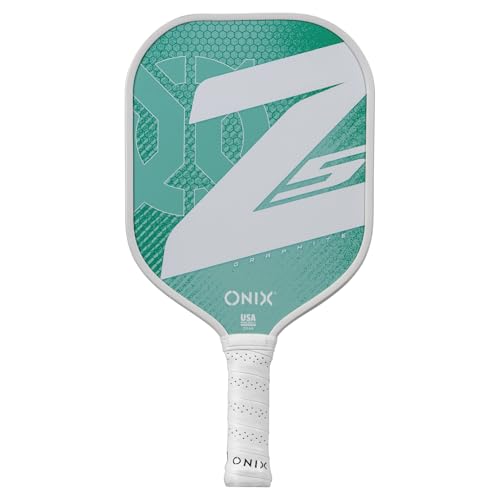 Onix Pickleball Z5 Graphite Beginner Pickleball Paddle Full spec sheet
  Selkirk Sport SLK Halo Control Max Pickleball Paddles Full spec sheet
  JOOLA Agassi Heat Vision 16mm Pickleball Paddle Full spec sheet
  CRBN Pickleball X Series Power Carbon Fiber Paddle 14mm elongated Full spec sheet
 Email me these picks
Every item on this page with its current price, in one email, so you can shop it later or in pieces. No sales sequence.
Used only to send the list. You can also just read it here.Frequently asked questions
What is the best pickleball paddle weight for women?
There is no single universal weight for women, but most comfortable, injury-conscious choices land between 7.6 and 8 ounces. Lighter paddles under 7.7 ounces are easiest on the wrist and elbow and quickest to react with at the net, while paddles near 8 ounces add more drive power. Match weight to your own swing speed and any joint concerns rather than to gender.
What grip size should a woman use for a pickleball paddle?
Most women land between 4 and 4.25 inches in grip circumference, with 4.25 inches being the single most common size sold across all paddles. Measure your own hand with the ruler method, palm crease to ring fingertip, rather than assuming a size, since hand measurements vary widely even among players of the same gender.
Do women really need a lighter paddle than men?
Not automatically. Weight should match swing speed, hand strength, and any joint sensitivity, not gender. On average women's swing speeds trend a bit slower, which is why lighter paddles get recommended more often, but plenty of women play mid-to-heavy paddles comfortably, and some men play light ones. Test against your own comfort, not a label.
Can a heavier pickleball paddle cause elbow pain?
Yes. A heavier or head-heavy paddle increases the load your elbow and shoulder absorb on every swing, which can aggravate or trigger tennis elbow style pain over repeated sessions. If you have any history of joint pain, choose a lighter paddle and talk to a doctor or physical therapist before committing to a heavier one.
Is a smaller grip always better for a smaller hand?
Usually, but not always. A grip that is too small forces you to squeeze harder to control the paddle face, which can tire your forearm just as much as a grip that is too large. Measure with the ruler method first, and if you are between sizes, a thin overgrip can add roughly a sixteenth of an inch to fine-tune the fit.
What is the difference between a widebody and an elongated paddle for women?
A widebody paddle is shorter and wider, giving a larger forgiving sweet spot that helps with mis-hits, which suits players still building consistency. An elongated paddle trades some width for extra length, adding reach and serve speed at the cost of a smaller sweet spot, which suits players with more consistent contact who want more court coverage.
Researched from published specs and verified owner reviews, not play-tested by us, and not professional advice. Heavier paddles add load on the elbow and shoulder; ask a doctor or physical therapist about joint pain.