Swing weight and twist weight explainer
Swing weight is how heavy a paddle feels when you swing it, and it rises with the square of the distance from your hand, so weight at the tip counts far more than weight in the handle. Twist weight is resistance to twisting on off-center hits, and it rises with width and weight at the edges.
Gear that matches your result
 MIGHTY HALO Lead Tape for Pickleball Paddles
 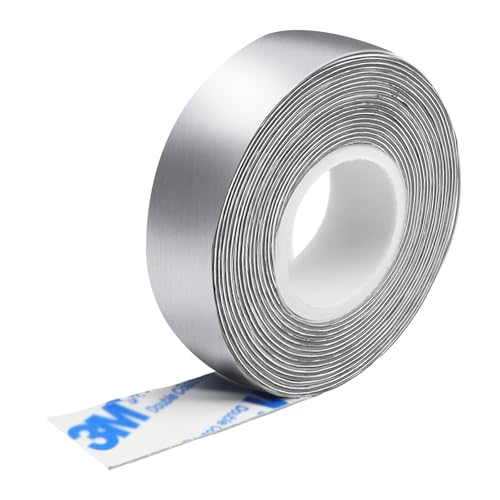 Golfupp 2 Grams Per Inch Golf Lead Tape
  Pickleball Effect Weighted Tungsten Tape for Pickleball Paddles
  Dany x Kevin Kids Pickleball Paddle Full spec sheet
  Selkirk Sport SLK Halo Power Max Pickleball Paddles Full spec sheet
 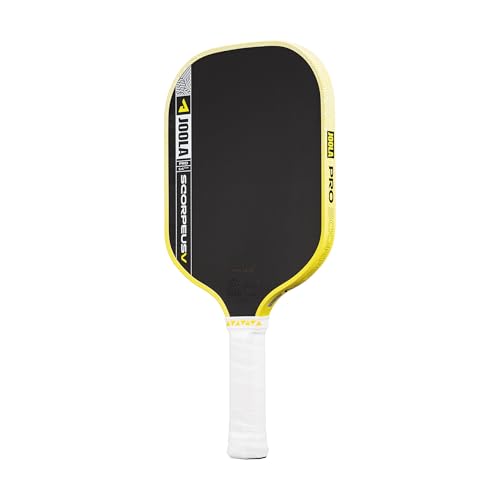 JOOLA Pro V Pickleball Paddle 14mm standard Full spec sheet
 How this calculator works
moment of inertia model: handle (20% of mass) + face (80%) about an axis 10 cm from the butt, plus tape at 12 o'clock or at 3 and 9 o'clock; reported as an index where a 8.0 oz, 16 in x 7.5 in, even-balance paddle = 100
This is a relative index computed from a simplified physical model, not a lab measurement, and it will not match numbers published by any particular measuring rig. Use it to compare setups and to see what lead tape does. Head-heavy setups increase load on the elbow and shoulder.
A well-reviewed paddle at $99.99, picked from the middle of the price range rather than the cheapest listing.
7.85 oz listed · 13 mm core · carbon fiber face
Email me my result and the picks
Your calculator settings and the matching gear list with current prices, in one email.
Used only to send the list. You can also just read it here.Frequently asked questions
What is swing weight in pickleball?
Swing weight describes how heavy a paddle feels when swung, technically its moment of inertia about a point near the handle. Because it depends on the square of the distance from your hand, a few grams at the tip raise it far more than the same grams in the handle. Two paddles with identical static weight can feel very different if one carries more mass toward the head.
What is twist weight on a pickleball paddle?
Twist weight is a paddle's resistance to twisting around its long axis when the ball hits off center. Wider faces and mass placed at the edges raise it. Higher twist weight feels more stable and makes the sweet spot play larger, which is why widebody paddles and lead tape at 3 and 9 o'clock are popular with players who mishit often.
Where should I put lead tape on a pickleball paddle?
Tape at 12 o'clock, the top of the head, raises swing weight most, adding power and plow-through. Tape at 3 and 9 o'clock, the sides, raises twist weight, adding stability on off-center hits. Tape near the throat changes static weight with little effect on feel. Start with 2 to 4 grams and adjust gradually.
Is this calculator the same as a swing weight machine?
No. It uses a simplified physical model to produce a relative index, where a typical 8 oz, 16 by 7.5 inch paddle scores 100. It is useful for comparing setups and seeing what tape does, but it will not match numbers measured on a swing weight machine, which depend on the actual mass distribution of each paddle.
Do elongated paddles have a higher swing weight?
Usually yes. An elongated paddle puts its face farther from the hand, so at the same static weight it swings heavier than a standard shape. That extra swing weight adds reach and power on drives and serves, and it costs some hand speed in fast volley exchanges.
Researched general guidance, not professional or medical advice. Heavier and head-heavy paddles increase load on the elbow and shoulder; if you have tennis elbow or joint pain, ask a doctor or physical therapist.