Best Pickleball Shoes for Men (2026)
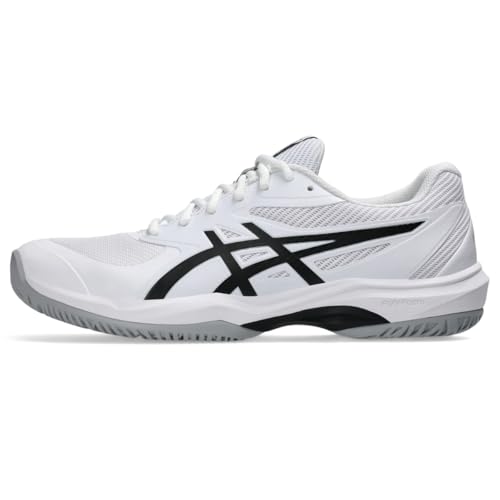
The ASICS Gel-Dedicate 9 Pickleball Tennis Shoes, about $80, are the best all-around pick for men because they are purpose-built for court lateral support rather than adapted from a running shoe.

The ASICS Gel-Dedicate 9 is a dedicated pickleball and tennis court shoe for about $80. ASICS builds its Gel-Dedicate line specifically for court sports, with reinforced sides for lateral cuts rather than the forward-only cushioning a running shoe is designed around.
Beginner, intermediate and expert picks
Beginner
 Skechers Men's Viper Court Smash Pickleball Sneaker$51.09
The Skechers Viper Court Smash costs about $51, making it one of the cheapest true court shoes in the catalog rather than a running shoe pressed into service. It gives a first-time player real lateral support without a big investment. Moving up a tier buys more durable outsole rubber and better long-term cushioning for players logging more hours on court.
Check priceIntermediate
ASICS Men's Gel-Dedicate 9 Pickleball Tennis Shoes$79.95The ASICS Gel-Dedicate 9 is a dedicated pickleball and tennis court shoe for about $80. ASICS builds its Gel-Dedicate line specifically for court sports, with reinforced sides for lateral cuts rather than the forward-only cushioning a running shoe is designed around.
Check priceExpert
 K-Swiss Men's Hypercourt Express 3 Tennis Shoe$130.00
The K-Swiss Hypercourt Express 3 sits at the top of the men's shoe catalog at about $130. K-Swiss built its Hypercourt and Express lines specifically for hard court tennis and pickleball, with more durable outsole compounds for players on the court several times a week.
Skip it if:Skip this if you play once a week or less; the extra durability and support this shoe is built for goes mostly unused at casual playing frequency, and a mid-tier court shoe will serve you just as well.
Check priceThe single biggest mistake men make buying pickleball shoes is grabbing a pair of running shoes out of the closet instead. Running shoes are built for forward motion in a straight line, and pickleball is built on sudden lateral cuts, quick stops, and split steps at the net. Check the court size calculator to see how much lateral movement a real court actually demands before deciding a running shoe will do.
Why do you need court shoes instead of running shoes for pickleball?
Running shoes are built with a rounded heel and softer midsole meant to absorb repeated forward impact, which is great for jogging and bad for cutting side to side. That rounded, soft construction can roll under your foot during a fast lateral movement, increasing the risk of an ankle roll. Court shoes, including every shoe on this page, use a flatter, harder outsole with reinforced sides built to resist that rolling motion, plus a herringbone or similar tread pattern designed to grip a hard court surface rather than pavement.
If you already own a running shoe you like and are only playing occasionally, it will not immediately hurt you, but if you are playing pickleball regularly, moving to a real court shoe measurably reduces the chance of a rolled ankle over time.
What is the difference between a pickleball shoe and a tennis shoe?
Very little, in most cases. Several shoes on this page, including entries from ASICS and K-Swiss, are sold both as tennis shoes and as pickleball shoes, sometimes under nearly identical model names. Tennis and pickleball put similar lateral, stop-and-start demands on a shoe, so a well-built tennis court shoe generally performs just as well on a pickleball court. The main thing to check is the outsole: a non-marking outsole is required at most indoor pickleball facilities, and most tennis and pickleball court shoes meet that requirement, but confirm before buying if you play indoors.
How much lateral support do you actually need?
It scales with how often and how competitively you play. A once-a-week social player benefits from any real court shoe over a running shoe, and does not need the most reinforced, most expensive option available. A player logging multiple sessions a week, especially anyone playing more competitively with frequent hard cuts at the net, benefits from the added side reinforcement and more durable outsole compound found in the higher tiers on this page, since that reinforcement is what wears out first under heavy lateral use.
How should a pickleball shoe fit?
A court shoe should fit snugly through the midfoot and heel, with about a thumb's width of space between your longest toe and the front of the shoe, similar to sizing guidance for running shoes. What is different from a running shoe is the sides: the upper around your midfoot should feel secure and resist collapsing when you push off laterally, since a loose fit there is what actually causes a foot to slide inside the shoe during a hard cut, straining the ankle even if the outsole itself has good grip. If you have wide feet, check the shoe's specific width options before buying, since several lines on this page, including the ASICS Gel-Dedicate and K-Swiss Hypercourt families, run true to standard width without much room to size up for width alone.
Does outdoor or indoor court surface change which shoe you need?
Somewhat. Outdoor hard courts are more abrasive and wear down an outsole faster, which favors a shoe with a more durable rubber compound like the higher-priced picks on this page if you play outside often. Indoor courts, typically a sport court surface or a hardwood gym floor, require a non-marking outsole to avoid leaving scuff marks, and most facilities enforce this rule strictly. Nearly every shoe built specifically for pickleball or tennis meets the non-marking requirement, but a shoe pulled from a different sport, like a basketball or running shoe, is more likely to fail it, which is one more reason to buy a purpose-built court shoe rather than repurposing something from the closet.
Are slip-in, hands-free shoes worth it for pickleball?
The Skechers Viper Court Reload Hands Free Slip-Ins in the picks list use a heel-collapsing design that lets you step in and out without bending down to tie laces, which is a genuine convenience between games or when changing shoes courtside. The tradeoff is a slightly less locked-down heel fit compared to a fully laced shoe, which matters more to players making very hard, repeated cuts than to social or once-a-week players. If convenience matters more to you than squeezing out the last bit of lateral lockdown, this style is a reasonable choice; competitive players logging serious hours should stick with a traditional laced court shoe.
Do you need separate indoor and outdoor pickleball shoes?
Not necessarily, but it depends on how often you switch surfaces. A single non-marking court shoe generally works fine on both indoor and outdoor hard courts, since both surfaces demand the same lateral support and both require, or at least benefit from, a non-marking outsole. The main practical difference is wear rate: outdoor courts are more abrasive on rubber compounds, so a shoe used mostly outdoors will wear out faster than the same shoe used mostly indoors. Players who split time roughly evenly between both surfaces sometimes keep two separate pairs simply to extend the usable life of each one, rotating them rather than because either single shoe genuinely cannot handle both surfaces well.
Do socks matter as much as the shoe itself?
They matter more than most players expect. A thin, slippery sock inside a well-built court shoe can undo a lot of the lateral security the shoe is designed to provide, since your foot can still shift inside the shoe even if the shoe itself does not shift on the court. A moisture-wicking athletic sock with some structure through the arch and heel keeps your foot locked in place against the shoe's upper, which matters as much for blister prevention as it does for lateral stability during hard cuts. This is a cheap fix worth checking before assuming a shoe fits poorly when the actual issue is sock choice, and it costs a fraction of what a new pair of shoes does to test, which makes it worth trying first before returning a shoe that otherwise fits fine and feels comfortable.
Comparison table
| Shoe | Price | Best for |
|---|---|---|
| Skechers Men's Viper Court Smash Pickleball Sneaker | about $51 | First real court shoe on a budget |
| ASICS Men's Gel-Dedicate 9 Pickleball Tennis Shoes | about $80 | Dedicated pickleball and tennis court shoe |
| Skechers Men's Viper Court Reload Hands Free Slip-Ins | about $70 | Slip-in convenience, hands-free entry |
| ASICS Men's Gel-Challenger 15 Tennis Shoes | about $120 | Established tennis-first court shoe |
| K-Swiss Men's Hypercourt Express 3 Tennis Shoe | about $130 | Most durable outsole for frequent play |
How we chose
We did not play-test these shoes on court. Every pick comes from published product listings, brand court-shoe line descriptions, and verified owner reviews, cross-checked to confirm each shoe is sold as a court shoe or tennis shoe rather than a running shoe. We split the tiers by price across the full range the men's category offers, from the cheapest true court shoe to the most expensive, rather than forcing a $150-plus tier onto a category that does not have one; the highest priced men's court shoe in the catalog sits at about $130.
Buying tips
- Do not buy a running shoe for pickleball if you play more than occasionally. The lack of lateral support is a real injury risk on a court built around side-to-side movement.
- Check the outsole is non-marking before playing at an indoor facility; most rules require it.
- Replace court shoes when the outsole tread wears smooth, not just when the upper looks worn, since traction loss is what leads to slips.
- If you already have foot or ankle issues, prioritize a shoe with more reinforced sides over one that is simply lighter.
Also worth considering
 Skechers Men's Viper Court Reload Hands Free Slip-Ins
  K-Swiss Men's Express Light Pickleball Shoes
  K-Swiss Men's Hypercourt Express 2 Tennis Shoe
  ASICS Men's Gel-Challenger 15 Tennis Shoes
  Skechers Men's Pickleball Viper Court Pro 2.0 Sneaker
  ASICS Men's Game FlyteFoam Tennis Shoes
 Email me these picks
Every item on this page with its current price, in one email, so you can shop it later or in pieces. No sales sequence.
Used only to send the list. You can also just read it here.Frequently asked questions
Can I wear running shoes to play pickleball?
You can, but it is not recommended for regular play. Running shoes are built for forward motion and use a rounded heel and softer midsole that can roll under your foot during a fast lateral cut, increasing ankle injury risk. Court shoes use a flatter outsole and reinforced sides built specifically to resist that rolling motion during side-to-side movement.
Is a tennis shoe the same as a pickleball shoe?
Often, yes. Many shoes on this page are sold as both tennis and pickleball shoes under the same or nearly identical names, since both sports demand similar lateral movement and quick stops. The main thing to confirm before buying is whether the outsole is non-marking, which most indoor pickleball facilities require.
What is the best budget pickleball shoe for men?
The Skechers Viper Court Smash, at about $51, is the cheapest true court shoe in the catalog rather than a running shoe adapted for the court. It gives a beginner real lateral support without a large upfront cost, and is a reasonable place to start before investing in a more durable, higher-priced pair.
How often should I replace my pickleball shoes?
Replace them once the outsole tread wears smooth, since that loss of traction is what leads to slips during quick stops and cuts, not simply how worn the upper fabric looks. A player on the court several times a week will typically wear through a pair faster than a once-a-week social player.
Do men need a different pickleball shoe than women?
The core construction, lateral support, and outsole design are the same regardless of gender. The main difference across men's and women's listings is sizing and fit, not performance features, so choose based on the sizing and width that actually fits your foot rather than assuming one line performs meaningfully better than the other.
Researched from published specs and verified owner reviews, not play-tested by us, and not professional advice. Heavier paddles add load on the elbow and shoulder; ask a doctor or physical therapist about joint pain.