Best Pickleball Paddles for Beginners (2026)
For most beginners the Onix Z5 Graphite Beginner Pickleball Paddle (about $47) is the safest first buy: about 7.85 ounces with a forgiving polymer honeycomb core built for control while you learn.
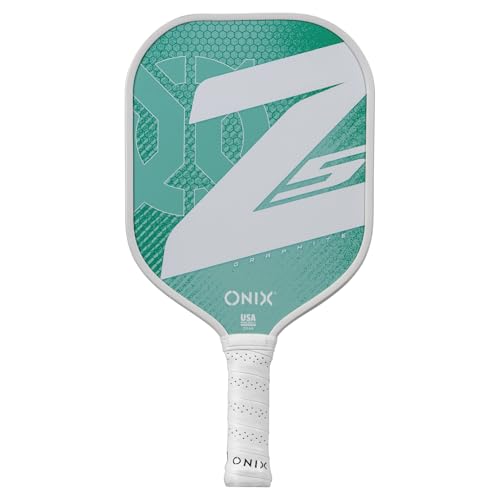
The Onix Z5 Graphite Beginner Pickleball Paddle is built and named for exactly this stage, at about 7.85 ounces with a polymer honeycomb core that forgives off center hits. It will not out spin a thermoformed paddle twice its price, but it teaches good footwork and paddle control instead of masking bad habits with expensive materials.
7.85 oz listed · graphite face
Beginner, intermediate and expert picks
Beginner
Onix Pickleball Z5 Graphite Beginner Pickleball Paddle$47.02The Onix Z5 Graphite Beginner Pickleball Paddle is built and named for exactly this stage, at about 7.85 ounces with a polymer honeycomb core that forgives off center hits. It will not out spin a thermoformed paddle twice its price, but it teaches good footwork and paddle control instead of masking bad habits with expensive materials.
Check priceIntermediate
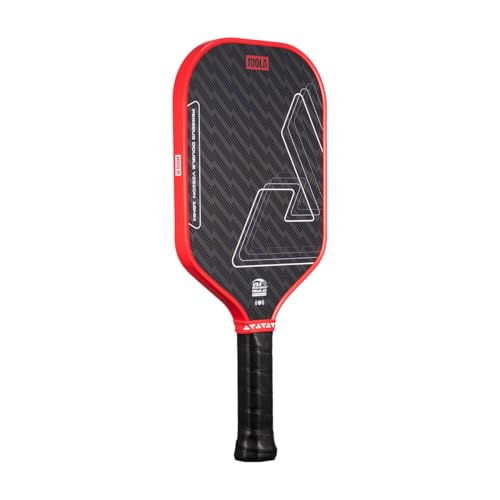 JOOLA Perseus Double Vision 16mm Pickleball Paddle$102.00
The JOOLA Perseus Double Vision 16mm Pickleball Paddle steps up to a 16mm carbon fiber elongated design at about 7.8 ounces, once dinks and third shot drops start to matter more than raw forgiveness. Compared to the Beginner tier, you give up some of the wide, easy sweet spot for more reach and spin on a longer face.
Check priceExpert
 JOOLA Ben Johns Perseus Pro IV 16mm Pickleball Paddle$149.95
The JOOLA Ben Johns Perseus Pro IV 16mm Pickleball Paddle is a raw carbon fiber, elongated tour paddle at about 7.9 ounces built to reward a fast, committed swing and heavy topspin. Compared to the Intermediate tier, the trade is a narrower sweet spot and a grittier surface that punishes a shaky or hesitant contact point.
Skip it if:Someone who has played only a handful of times, since the raw carbon surface and narrow face reward technique that a brand new player has not built yet.
Check priceWhat is a good pickleball paddle for beginners?
A good beginner pickleball paddle is midweight, forgiving on off center hits, and priced low enough that you are not afraid to keep playing while you figure out your own preferences. Run your grip hand through our grip size calculator before you buy anything, since a paddle that fits your hand well matters more early on than the brand printed on the throat. Our full guide to choosing a pickleball paddle covers weight, thickness, shape, and face material in more depth if you want the complete picture.
Most new players do not need a raw carbon fiber, tournament grade paddle in their first month. A paddle in the $30 to $60 range, like the Onix Z5 Graphite Beginner Pickleball Paddle, gives enough pop to rally and enough sweet spot to survive a shaky contact point while you build the fundamentals. The paddle rarely holds a beginner back nearly as much as footwork, positioning, and knowing where to stand relative to the non-volley zone, commonly called the kitchen, which extends 7 feet from the net on each side of a regulation court.
It also helps to know the court you are learning on. A regulation court is 20 feet wide by 44 feet long for both singles and doubles, with the net set at 36 inches at the sidelines and 34 inches at the center. Total recommended playing area, including out of bounds space to move and stop safely, is 30 by 60 feet at minimum and 34 by 64 feet for tournament play. None of that changes what paddle to buy, but it explains why so many beginner rallies are decided at the kitchen line rather than from the baseline, and why a forgiving paddle matters more there than a powerful one.
What weight pickleball paddle should a beginner use?
A midweight paddle, roughly 7.8 to 8.2 ounces, is the standard recommendation for a first paddle because it reacts quickly enough at the net and still carries a serve or a drive without extra arm effort. The Onix Z5 Graphite Beginner Pickleball Paddle sits at about 7.85 ounces, right in that range. A lighter paddle under 7.7 ounces trades some drive power for faster hands and less load on the arm, which is worth knowing if you already deal with elbow or shoulder soreness. Heavier or head heavy paddles increase the load on the elbow and shoulder with every swing, so anyone managing joint pain or a history of tennis elbow should talk to a doctor or physical therapist before choosing a heavier paddle rather than guessing. Our paddle weight guide goes further into how weight is distributed across a paddle, not just the number printed on the box.
What paddle face and shape should a beginner start with?
USA Pickleball places no rule on paddle thickness or weight, only on overall size, capping combined length plus width at 24 inches with length alone capped at 17 inches. That leaves the core thickness and face material entirely up to the manufacturer, and it is where most of the real performance differences live. A polymer honeycomb core, like the one in the Onix Z5 Graphite Beginner Pickleball Paddle, is the standard forgiving core found on nearly every entry level paddle because it softens contact and reduces vibration compared to a stiffer material. A graphite or fiberglass face, rather than raw carbon fiber, tends to feel a little softer on contact, which suits a new player who has not yet built a fully consistent swing. A standard shape, rather than an elongated one, keeps the sweet spot wide and short, which matters more early on than the extra reach an elongated paddle offers. Our paddle shape guide breaks down the three shape families in detail.
What should you spend on a first pickleball paddle?
Between $30 and $60 is a reasonable range for a first paddle. That budget covers solid midweight options with a polymer honeycomb core and a graphite or fiberglass face, such as the Gamma Sports 5.0 Pickleball Paddle or the Franklin Sports Signature Series Pro USAPA Pickleball Paddle 16mm elongated. Spending $150 or more on a first paddle rarely pays off, because you do not yet know whether you prefer a thin, powerful core or a thick, control oriented one, an elongated reach or a standard forgiving shape. Figure that out on a budget paddle first, then spend more once an upgrade actually targets something you are missing. If your budget is the deciding factor, our pickleball paddles under $50 roundup narrows the field further by price alone.
Beginner paddle options compared
| Paddle | Price | Weight | Core | Best for |
|---|---|---|---|---|
| Onix Pickleball Z5 Graphite Beginner Pickleball Paddle | about $47 | 7.85 oz | Polymer honeycomb | First paddle, all around learning |
| Franklin Sports Signature Series Pro USAPA Pickleball Paddle 16mm elongated | about $54 | 8.1 oz | Polymer honeycomb, 16mm | Slightly more pop, still forgiving |
| HEAD Radical Elite Pickleball Paddle | about $43 | 8.1 oz | Polymer honeycomb, 15mm | Budget shopper who still wants a name brand |
| Selkirk Sport SLK Halo Control Max Pickleball Paddles | about $100 | 7.85 oz | 16mm carbon fiber face | Fast learner ready to step up early |
When should a beginner upgrade to an intermediate paddle?
Most players get real value out of a beginner paddle for several months of regular play, and the upgrade decision should follow a specific frustration rather than a calendar. If you are consistently getting outspun at the net, a carbon fiber face like the one on the JOOLA Perseus Double Vision 16mm Pickleball Paddle adds grip and rotation on the ball. If your dinks keep popping up, a thicker 16mm core softens the feel and adds control. If you want more pace on drives and can handle a narrower sweet spot, an elongated shape adds reach and leverage. Our intermediate paddle guide walks through that next step in detail and compares core options against what you are likely using now.
How we chose these paddles
We did not play test these paddles in person. Every pick here is pulled from published product listings, manufacturer specifications, USA Pickleball's approved paddle records where applicable, and verified owner reviews, cross checked for price and stated weight, thickness, shape, and face material. We favored paddles with a documented midweight range and a polymer honeycomb or comparable forgiving core for the Beginner and Intermediate tiers, and we only listed a spec, like weight or core thickness, when the manufacturer's own listing states it. Where a listing does not state a weight, thickness, or core material, we left it out rather than guess, which is why some paddles above are described with fewer specifics than others.
Common mistakes new players make when buying a first paddle
The most common mistake is buying a paddle set of two or four for a family or a group of friends without checking whether the included paddles fit each person's hand and swing. A partner who is smaller or newer to racquet sports may do better with a lighter paddle from the same budget rather than an identical one out of a set. The second common mistake is chasing a pro's exact paddle before you have a repeatable swing. A raw carbon fiber, elongated tour paddle rewards a fast, committed contact point, and a hesitant or inconsistent swing will not get more out of it than out of a simpler beginner paddle. The third mistake is ignoring grip size. A grip that is too small forces extra squeezing that tires the forearm quickly, and a grip that is too large limits wrist snap on dinks and resets, so it is worth checking your own grip measurement before you finalize a purchase, using the ruler method of measuring from the middle crease of your palm to the tip of your ring finger.
Buying tips for your first paddle
Confirm a paddle is on USA Pickleball's approved list before buying if you plan to play in a league or sanctioned tournament, since an unapproved paddle can get you defaulted out of a match. Do not buy a second or third paddle until your first one has taught you something concrete about your preferences, whether that is more spin, more control, or less weight on your arm. And do not assume a higher price buys a better beginner experience. Several of the paddles above cost under $60 and will not be the reason you lose a rally against another new player.
Frequently asked questions
Also worth considering
 Franklin Sports Signature Series Pro USAPA Pickleball Paddle 16mm elongated Full spec sheet
  HEAD Radical Elite Pickleball Paddle Full spec sheet
  Selkirk Sport SLK Halo Control Max Pickleball Paddles Full spec sheet
  Paddletek Bantam EX-L Pickleball Paddle
  Wilson Tempo 16mm Pickleball Paddle Full spec sheet
  Gamma Sports 5.0 Pickleball Paddle Full spec sheet
 Email me these picks
Every item on this page with its current price, in one email, so you can shop it later or in pieces. No sales sequence.
Used only to send the list. You can also just read it here.Frequently asked questions
What is a good pickleball paddle for beginners?
A good beginner paddle is midweight, roughly 7.8 to 8.2 ounces, with a forgiving core such as polymer honeycomb and a face material like graphite or fiberglass. Price between $30 and $60 is typical. The Onix Z5 Graphite Beginner Pickleball Paddle at about $47 is a straightforward, well specified example built specifically for this stage.
What is the best pickleball paddle weight for beginners?
Most beginners do well with a midweight paddle, 7.8 to 8.2 ounces, since it moves quickly at the net without sacrificing power on a serve or drive. Lighter paddles under 7.7 ounces reduce arm effort and can help players managing elbow or shoulder soreness. Heavier paddles above 8.3 ounces add pop but require more swing effort per shot.
Should a beginner buy an expensive paddle?
No. A first paddle in the $30 to $60 range is enough to learn the fundamentals and figure out your own preferences on weight, thickness, and shape. Spending $150 or more before you know what you like is rarely worth it. Save the bigger purchase for a specific upgrade once you know exactly what your current paddle is missing.
Is graphite or fiberglass better for a beginner paddle?
Both work well for a first paddle. Graphite and fiberglass faces tend to feel a little softer and more forgiving than raw carbon fiber, which suits a new player still developing consistent contact. Carbon fiber generally produces more spin and holds up longer, so it becomes more valuable once your swing is more repeatable.
How long does a beginner pickleball paddle last?
A well made beginner paddle used a few times a week typically lasts one to two years of regular play before the face noticeably loses pop, based on published warranty terms and owner reviews rather than in person testing. Edge guard tape and a paddle cover both extend that life by protecting the face from court and fence contact.
Do beginners need a thick or thin paddle core?
A thicker core, around 16mm, is the common beginner recommendation because it softens the feel at the kitchen line and forgives mistimed dinks. Thinner cores, down toward 10 to 13mm, favor power and are usually a better fit once you already have consistent control and want more pace on drives.
Researched from published specs and verified owner reviews, not play-tested by us, and not professional advice. Heavier paddles add load on the elbow and shoulder; ask a doctor or physical therapist about joint pain.