Best Pickleball Paddles for Spin (2026)
The HISK RAV PRO T700 Toray Raw Carbon Fiber Pickleball Paddle (about $52) is our top pick for spin under $100: a 16mm elongated carbon fiber paddle at about 7.9 ounces with a raw, unpainted surface built to grip the ball.

The HISK RAV PRO T700 Toray Raw Carbon Fiber Pickleball Paddle uses an unpainted, textured raw carbon face at about 7.9 ounces on a 16mm elongated core, a construction that consistently shows up on spin focused paddles at every price point. Compared to the Beginner tier, the raw surface bites into the ball more, at the cost of a slightly less forgiving sweet spot.
7.9 oz listed · 16 mm core · elongated shape · carbon fiber face
Beginner, intermediate and expert picks
Beginner
 SS OXIKEN Pickleball Paddles USAPA Approved T700 Carbon Fiber$39.99
The SS OXIKEN Pickleball Paddles USAPA Approved T700 Carbon Fiber paddle brings a genuine T700 carbon surface and a 16mm polymer honeycomb core to a starter budget under $40. It will not have the refined balance of a $150 tour paddle, but it lets a newer player feel what a grippy carbon surface actually does to the ball before spending more.
Check priceIntermediate
HISK RAV PRO T700 Toray Raw Carbon Fiber Pickleball Paddle$51.95The HISK RAV PRO T700 Toray Raw Carbon Fiber Pickleball Paddle uses an unpainted, textured raw carbon face at about 7.9 ounces on a 16mm elongated core, a construction that consistently shows up on spin focused paddles at every price point. Compared to the Beginner tier, the raw surface bites into the ball more, at the cost of a slightly less forgiving sweet spot.
Check priceExpert
 JOOLA Ben Johns Perseus Pro IV 16mm Pickleball Paddle$149.95
The JOOLA Ben Johns Perseus Pro IV 16mm Pickleball Paddle pairs a raw carbon fiber, elongated face with a tour level balance at about 7.9 ounces, built around the same spin heavy game as the paddles below it but refined for a player who already generates consistent racquet head speed. Compared to the Intermediate tier, the gain is mostly in feel and consistency shot to shot rather than in spin ceiling.
Skip it if:A player still working on consistent contact, since a raw carbon surface and an elongated, narrower sweet spot punish mishits more than a standard shaped paddle does.
Check priceWhat makes a pickleball paddle good for spin?
Spin comes mostly from the paddle face, not the core. A textured, unpainted raw carbon fiber surface grips the ball longer at contact than a painted or smoother face, which lets a player brush up and across the ball to generate more rotation on serves, third shot drops, and passing shots. Before you shop, run the paddle thickness calculator to see how core thickness interacts with the face material choices below, since the two specs work together rather than independently. It also helps to check your own grip size first, since a grip that is too large limits the wrist snap that actually produces spin on a swing, no matter how grippy the face is.
Raw carbon surfaces became common across the market once players noticed how much more bite an unpainted, textured carbon face gave compared to a glossy or painted one, and manufacturers responded by releasing raw carbon versions of paddles across nearly every price tier. The good news for a budget conscious player is that the surface technology, not the brand name, does most of the work, which is why a $52 paddle and a $150 paddle can use a very similar raw carbon face. Paddle surface texture has also been an ongoing topic in the sport's rulemaking, and USA Pickleball's approval process for tournament play does evaluate paddle surfaces as part of what gets certified, which is one more reason to confirm a paddle's approval status before buying if sanctioned play is the goal.
What is T700 carbon fiber and does it matter for spin?
T700 refers to a specific grade of carbon fiber, originally a Toray industrial designation, that paddle brands use as shorthand for a stiffer, higher grade weave than a generic carbon fiber label. Several paddles in this list state T700 or T700SC directly in their product name, including the SS OXIKEN T700 Carbon Fiber paddle and the VAN WIN Pickleball Paddles T700SC Carbon Fiber paddle, both built on a 16mm core. A stiffer weave transfers energy more efficiently at contact, which pairs well with the texture of a raw finish to add both bite and pop on the same swing. Not every carbon fiber paddle states a T700 designation, and a plain carbon fiber face still spins the ball better than fiberglass or graphite, so treat T700 as a bonus signal rather than a requirement.
Best pickleball paddle for spin under $100
Spin does not require a $200 paddle. The HISK RAV PRO T700 Toray Raw Carbon Fiber Pickleball Paddle at about $52 and the Vomeepeak Thermoformed MAX Carbon Fiber T700 Pickleball Paddle at about $70 both pair a raw or textured carbon face with a 16mm elongated core, the same recipe used on paddles three times the price. The Luzz Pickleball Paddle Cannon Thermoformed T700 Carbon Fiber paddle, also under $110, adds a thermoformed edgeless build, a construction method that fuses the face and frame into one piece for a stiffer overall response. If a raw carbon surface under $60 is the priority, the XSPAK PRO Series Thermoformed T700SC Tournament Carbon Fiber paddle and the Frumhestre T700 Carbon Fiber Pickleball Paddle at 14mm are both worth comparing directly against the picks above.
Spin and control vs spin and power
A spin focused paddle still needs a core thickness decision, and that decision shifts the paddle toward control or toward power. A 16mm core, like the one on the HISK RAV PRO T700 Toray Raw Carbon Fiber Pickleball Paddle, pairs spin with more control and a softer feel, which suits a player who wants to spin dinks and resets at the kitchen line. A thinner 13mm or 14mm core, like the one on the Frumhestre T700 Carbon Fiber Pickleball Paddle, pairs the same raw carbon spin with more pop, which suits a player who wants heavy topspin on drives and passing shots rather than soft, spinny dinks. Neither is objectively better; it depends on which shot you are trying to add spin to. Our core thickness guide compares the three common thicknesses directly.
Shape also plays a role that gets less attention than face and core. Nearly every paddle on this list uses an elongated shape, which stretches the hitting face longer and narrower, adding leverage that helps generate racquet head speed through contact. That extra leverage is part of why elongated paddles pair so often with raw carbon spin surfaces, since a faster, longer swing path gives the textured face more time to grip and brush the ball. The tradeoff is a narrower sweet spot and, on most elongated paddles, a slightly shorter handle than a standard shape offers, which matters if you play a two handed backhand or rely on extra reach on defense. Our paddle shape guide covers that tradeoff directly.
Where spin actually helps most is at the kitchen and on the serve, where the non-volley zone rule forces a slower, more technical rally rather than a power exchange. The kitchen extends 7 feet from the net on each side of the court, and most points at the intermediate level and above are decided in or around that zone, which is exactly where a grippy, spinny dink or a heavily rotated third shot drop earns its keep. A drive from the baseline benefits from spin too, mostly to keep the ball dipping down into the court, but the margin for error is smaller than at the net.
Does paddle weight affect spin?
Weight affects how much racquet head speed you can generate, and racquet head speed is part of what a textured face converts into spin, so a heavier paddle swung at the same effort can add a little more rotation than a lighter one. That gain is small compared to what face material and swing path contribute, and it comes with a real tradeoff. Heavier and head heavy paddles increase the load on the elbow and shoulder with every swing, so if you already deal with joint pain or a history of tennis elbow, talk to a doctor or physical therapist before chasing extra spin through added weight rather than through a grippier face. Most paddles on this list sit in the 7.8 to 8.2 ounce midweight range for exactly this reason, favoring face texture over added mass.
Spin paddle options compared
| Paddle | Price | Core | Face | Best for |
|---|---|---|---|---|
| SS OXIKEN Pickleball Paddles USAPA Approved T700 Carbon Fiber | about $40 | 16mm honeycomb | T700 carbon fiber | Budget entry into raw carbon spin |
| HISK RAV PRO T700 Toray Raw Carbon Fiber Pickleball Paddle | about $52 | 16mm elongated | Raw carbon fiber | Best value spin paddle under $100 |
| Vomeepeak Thermoformed MAX Carbon Fiber T700 Pickleball Paddle | about $70 | 16mm elongated | T700 carbon fiber | Thermoformed build for a stiffer response |
| JOOLA Ben Johns Perseus Pro IV 16mm Pickleball Paddle | about $150 | 16mm elongated | Raw carbon fiber | Tour level balance and finish |
How we chose these paddles
We did not play test these paddles on court. We selected paddles whose product listings state a carbon fiber face, prioritizing raw or textured finishes and T700 or T700SC designations where the manufacturer states them, and cross checked price against core thickness and weight where those specs were published. Several paddles in this category do not list a weight or core material, and we did not fill in those gaps with an assumption. Everything here comes from listed specifications, USA Pickleball's approved paddle records where applicable, and verified owner reviews rather than from our own contact with the ball.
Buying tips for a spin focused paddle
A raw carbon face wears differently than a painted one, and heavy court contact, especially on outdoor concrete, will dull the texture faster than indoor play does, so check owner reviews for how a specific paddle holds its grip over months of use before committing to one at the higher end of this list. A soft cleaning after outdoor sessions, wiping down grit rather than scrubbing the texture away, helps a raw face keep its bite longer. And remember that spin is a tool, not a substitute for placement. A well placed shot with a moderate spin paddle usually beats a poorly placed shot with the grippiest face on the market. If you already have a paddle you like and just want more rotation on your shots, revisit your swing weight and grip technique before assuming a new paddle is the fix, since a slower or flatter swing path limits what any face material can do.
Frequently asked questions
Also worth considering
 VAN WIN Pickleball Paddles T700SC Carbon Fiber USAPA Approved for Full spec sheet
 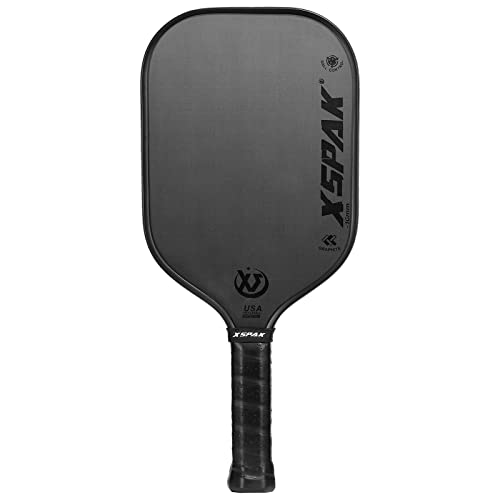 XSPAK PRO Series Thermoformed T700SC Tournament Carbon Fiber Full spec sheet
  Frumhestre T700 Carbon Fiber Pickleball Paddle Full spec sheet
  Vomeepeak Thermoformed MAX Carbon Fiber T700 Pickleball Paddle Full spec sheet
  Luzz Pickleball Paddle Cannon Thermoformed T700 Carbon Fiber Full spec sheet
 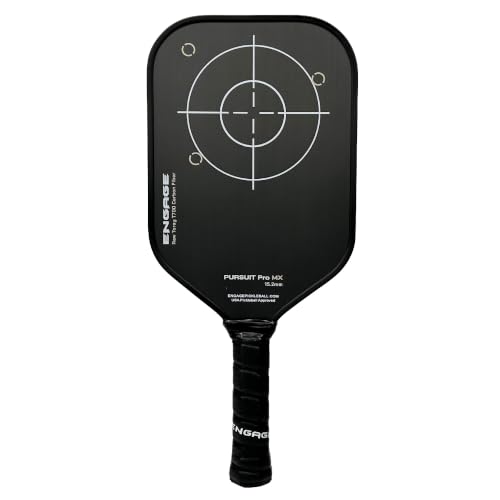 Engage Pursuit Pro MX Raw Carbon Pickleball Paddle Full spec sheet
 Email me these picks
Every item on this page with its current price, in one email, so you can shop it later or in pieces. No sales sequence.
Used only to send the list. You can also just read it here.Frequently asked questions
What is the best pickleball paddle for spin under $100?
The HISK RAV PRO T700 Toray Raw Carbon Fiber Pickleball Paddle, about $52, pairs a raw unpainted carbon face with a 16mm elongated core, the same combination used on paddles two to three times its price. The Vomeepeak Thermoformed MAX Carbon Fiber T700 paddle, about $70, is another strong option in the same price band.
Does a raw carbon fiber paddle really spin the ball more?
Yes, according to manufacturer claims and widely reported owner reviews. An unpainted, textured raw carbon surface grips the ball longer at contact than a smoother, painted face, which lets a player generate more rotation with the same swing. The effect is consistent enough that most spin focused paddles across every price tier now use some form of raw or textured carbon face.
What does T700 mean on a pickleball paddle?
T700 is a carbon fiber grade designation, originally from Toray, that paddle brands use to signal a stiffer, higher grade weave than a generic carbon fiber label. A T700 or T700SC face transfers energy more efficiently at contact, which pairs well with a raw or textured finish to add both spin and pop on the same shot.
Is spin more important than power for pickleball?
It depends on the shot. Spin matters most on serves, third shot drops, and dinks near the kitchen, where placement and ball control decide the point. Power matters more on drives and put away shots from mid court. Many players choose a 16mm paddle for a balance of both rather than maximizing one at the expense of the other.
Do spin paddles need a raw or a painted carbon face?
A raw, unpainted carbon face generally produces more spin than a painted one because the exposed texture grips the ball better at contact. Painted faces can still spin the ball reasonably well and tend to look cleaner for longer, so the choice is partly cosmetic once you have decided carbon fiber is the material you want.
Do thicker or thinner paddle cores spin the ball more?
Core thickness affects power and control more than spin directly, since spin is generated mainly by the face material and texture. A 16mm core adds control and a softer feel to a spin oriented face, while a 13mm or 14mm core adds pop to the same spin, so the choice depends on whether you want spinny control shots or spinny power shots.
Researched from published specs and verified owner reviews, not play-tested by us, and not professional advice. Heavier paddles add load on the elbow and shoulder; ask a doctor or physical therapist about joint pain.