Pickleball Paddle Weight Explained
Most players should start with a midweight paddle, 7.8 to 8.2 ounces, such as the JOOLA GRAF Edge 16mm at about 7.8 ounces, then adjust up or down only after a few sessions.

7.8 oz listed · 16 mm core · elongated shape · carbon fiber face
What weight pickleball paddle should I use?
Start with a midweight paddle, 7.8 to 8.2 ounces, and only move away from it once you know specifically what you are chasing. Run the exact number for a paddle you are considering, plus any grip or edge guard tape you plan to add, through our paddle weight calculator before you buy, since listed weights on the box are usually a range rather than a single fixed number. A paddle like the JOOLA GRAF Edge 16mm Pickleball Paddle, at roughly 7.8 ounces, sits right in the middle of that range and is a reasonable default while you are still figuring out your preferences.
What is the average pickleball paddle weight?
Across the paddles we track, the bulk of the market clusters between 7.6 and 8.3 ounces, with 7.8 to 8.2 ounces treated as the standard midweight band. Paddles like the Head Radical Tour Grit Pickleball Paddle at about 7.9 ounces and the HEAD Radical Team 15 2026 Pickleball Paddle at about 8.3 ounces sit just inside and just outside that band, which is a useful way to feel the difference a few tenths of an ounce makes in your hand. There is no rule from USA Pickleball limiting weight, so this range is purely a product of what manufacturers have found players prefer.
Light vs heavy paddles: what is the actual tradeoff?
A light paddle, generally under 7.7 ounces, swings faster and gets to the ball sooner on quick net exchanges. The Selkirk Sport SLK Neo Paddle Set of 2, at about 7.5 ounces, is a good example of that category, and light paddles are a common recommendation for players prioritizing hand speed or managing joint pain. A heavy paddle, generally 8.3 ounces or more, carries more mass through contact and produces more pop on drives and serves without swinging any harder, which is why paddles like the HEAD Radical Team 15 2026 Pickleball Paddle and the HEAD Gravity Tour 2025 Pickleball Paddle, both around 8.3 to 8.5 ounces, appeal to players who hit hard and drive from the baseline. The tradeoff is simple: more weight means more effort per swing and slower recovery between shots, especially at the net.
A midrange paddle just under 7.8 ounces, such as the Franklin Sports Signature Carbon Pickleball Paddle 13mm at about 7.75 ounces, sits close enough to midweight that most players will not notice a meaningful difference against a true 7.8 to 8.2 ounce paddle. Small differences of a tenth of an ounce or two rarely change how a paddle feels; differences of half an ounce or more usually do.
Does paddle weight affect my elbow or shoulder?
Yes. Heavier and head-heavy paddles increase the load your elbow and shoulder absorb on every swing, and that repeated load is a common contributor to pickleball elbow and shoulder strain over a season of regular play. If you already have a history of tennis elbow, golfer's elbow, or shoulder pain, talk to a doctor or physical therapist before moving to a heavier paddle, and consider a lighter paddle like the Selkirk Sport SLK Neo Paddle Set of 2 paired with a cushioned grip instead. Our guide to the best pickleball paddles for tennis elbow covers this in more depth.
How do I check a paddle's actual weight before buying?
Listed weights on most retail listings are a range, often plus or minus a quarter ounce, because paddles are hand-finished and small batch variation is normal even within the same model. If a listing states a single number, treat it as the middle of that range rather than a guarantee. Reviews that mention a kitchen scale reading are more reliable than the headline spec, and if exact weight matters to you for tournament play, weigh the paddle yourself as soon as it arrives so you can return it while that is still an option.
Should I add lead tape to change the weight?
Lead tape is the standard way to add mass to a paddle that already fits your hand and swing but feels a touch light. It is cheap, reversible, and lets you fine-tune weight and balance in small increments rather than buying a whole new paddle. Where you place it matters as much as how much you add, since tape at the tip changes the paddle differently than tape near the handle. Our guide to adding lead tape and our swing weight vs twist weight guide both go into the mechanics of that tradeoff.
Does grip size change how heavy a paddle feels?
Yes, indirectly. A grip that is too large for your hand forces you to squeeze harder to control the paddle face, which makes even a properly midweight paddle feel more tiring to swing over a long match. A grip that is too small can let the paddle twist slightly on contact, which some players compensate for by gripping tighter, again adding fatigue that has nothing to do with the paddle's actual ounce weight. Measuring your hand with the ruler method described in our grip size guide is a useful step before assuming a paddle's weight is the source of arm fatigue.
How does paddle shape interact with weight?
An elongated paddle and a standard paddle of the same static weight do not necessarily swing the same, since the elongated paddle's extra length pushes more mass farther from the handle, raising swing weight even when the number on the label is identical. This is one reason two paddles both listed at 7.9 ounces, like the Head Radical Tour Grit Pickleball Paddle and an elongated model at a similar static weight, can feel meaningfully different in hand. If a paddle feels heavier than its listed weight suggests, shape and balance point are often the reason, not an inaccurate label. Our paddle shape guide covers how shape affects handling in more detail.
Common weight-related mistakes
The most common mistake is picking a paddle weight based on what a favorite player uses rather than your own body and swing. Touring players have typically spent years adapting to a specific weight, often adding lead tape to reach a precise, personalized number well beyond any stock figure. A second mistake is assuming heavier always means better power, when in practice technique, core thickness, and face material all contribute more to power than raw weight alone. A third mistake is ignoring early warning signs of strain, like a sore forearm after matches, and continuing with a heavier paddle rather than stepping down in weight or reassessing grip size and technique first.
Weight classes at a glance
| Class | Typical range | Feel | Best for |
|---|---|---|---|
| Light | Under 7.7 oz | Fast, low effort | Fast hands, joint protection |
| Midweight | 7.8 to 8.2 oz | Balanced | Most players, all-court games |
| Heavy | 8.3 oz and up | More pop, more effort | Baseline drivers, big serves |
How does weight change across a single playing session?
A paddle does not physically get heavier during a match, but fatigue makes it feel that way, which is why some players who play well with a heavier paddle for the first game start missing more shots late in a long session. If you notice your form or shot placement declining specifically in the second half of a long day of play, that is a signal worth testing a lighter paddle against rather than assuming it is purely a conditioning issue. Rotating between a primary paddle and a lighter backup for practice sessions is a low-cost way to see whether weight is contributing to that late-match drop-off before committing to a permanent change.
Buying tips
Do not chase a specific ounce number without also trying the paddle, since balance point and grip shape change how a given weight feels just as much as the number itself. If you play several times a week and start to notice elbow or shoulder soreness after matches, that is a signal to reassess weight before anything else, including form. Everything in this guide is based on published specs, USA Pickleball's approved paddle records, and verified owner reviews rather than in-person play testing.
Frequently asked questions
Gear mentioned in this guide
 Selkirk Sport SLK Neo Paddle Set of 2
 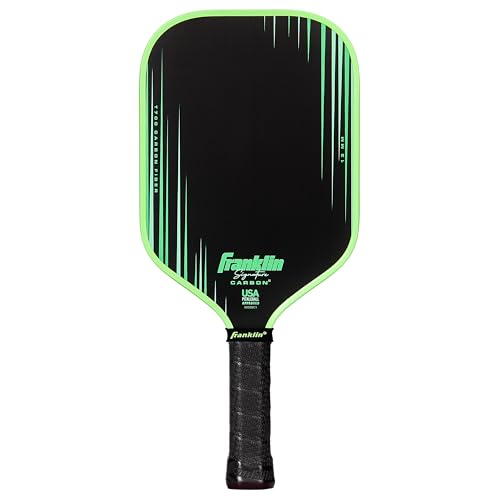 Franklin Sports Signature Carbon Pickleball Paddle 13mm Full spec sheet
  Head Radical Tour Grit Pickleball Paddle Full spec sheet
  HEAD Radical Team 15 2026 Pickleball Paddle Full spec sheet
 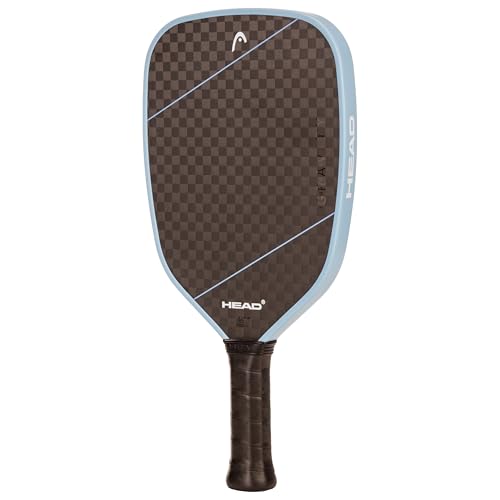 HEAD Gravity Tour 2025 Pickleball Paddle Full spec sheet
  Gearbox CX14H Ultimate Power Hyper Pickleball Paddle Full spec sheet
 Email me this guide's gear list
Every item on this page with its current price, in one email, so you can shop it later or in pieces. No sales sequence.
Used only to send the list. You can also just read it here.Frequently asked questions
What weight pickleball paddle should I use?
Start with a midweight paddle, 7.8 to 8.2 ounces. It gives enough power to drive and serve comfortably while staying light enough to react quickly at the net. Only move to a lighter or heavier paddle once you know specifically what you are trying to fix, such as arm fatigue or a lack of pop on drives.
What is considered a light pickleball paddle?
A paddle under about 7.7 ounces is generally considered light. Light paddles swing faster and put less load on the elbow and shoulder, which is why they are often recommended for players managing joint pain or players who prioritize quick hands at the net over raw power on drives and serves.
What is considered a heavy pickleball paddle?
A paddle at 8.3 ounces or more is generally considered heavy. Heavy paddles add pop on drives and serves without requiring a harder swing, but they also increase the load on your arm with every shot and slow down your recovery between fast exchanges at the net.
Can paddle weight cause elbow or shoulder pain?
Heavier and head-heavy paddles increase the repeated load on the elbow and shoulder with every swing, which is a common contributor to pickleball-related arm strain over a season of play. Anyone with a history of tennis elbow, golfers elbow, or shoulder pain should ask a doctor or physical therapist before choosing a heavier paddle.
Is the weight listed on a paddle exact?
Usually not. Most listings give a weight range, often plus or minus a quarter ounce, because paddles are hand-finished and vary slightly batch to batch. Treat a single listed number as an estimate of the middle of that range, and weigh the paddle yourself on a kitchen scale when it arrives if exact weight matters to you.
Should I add lead tape to make my paddle heavier?
Lead tape is a cheap, reversible way to add small amounts of weight to a paddle you already like, rather than buying an entirely new one. How much it changes the feel depends heavily on where you place it, since tape near the tip affects swing weight differently than tape near the handle.
Researched general guidance, not professional or medical advice. Heavier and head-heavy setups add load on the elbow and shoulder; ask a doctor or physical therapist about joint pain.