How to Measure Pickleball Grip Size
Measure from the middle crease of your palm to the tip of your ring finger in inches; most adults land near 4.25 inches, the most common pickleball grip size sold.

How do I measure my pickleball grip size?
The standard method is the ruler method. Hold your dominant hand open, palm up, and measure in a straight line from the middle crease of your palm to the tip of your ring finger. That number in inches is your recommended grip circumference. Before you buy a paddle or an overgrip, run that measurement through our grip size calculator to see where you land relative to the common sizes sold today.
Grip circumferences on pickleball paddles generally run from 4 inches up to 4.75 inches, with 4.25 inches being the most common size across brands. A quarter inch difference sounds small, but it changes how much your fingers overlap your palm on contact, which affects both comfort and control over a long match.
Is there a height-based grip size chart?
Yes, and it is a useful shortcut when you cannot measure your hand directly, though the ruler method is always more accurate for an individual player. As a general guide, players under 5 feet 4 inches tend to fit a 4 inch or 4.125 inch grip, players between 5 feet 4 inches and 5 feet 10 inches tend to fit 4.25 inches, and taller players above 5 feet 10 inches often fit 4.375 inches to 4.5 inches. Hand size does not track height perfectly, so treat this as a starting estimate to confirm with the ruler method.
Grip size chart by hand measurement
| Palm-to-fingertip measurement | Recommended grip size |
|---|---|
| Under 4 inches | 4 inches |
| 4 to 4.25 inches | 4.125 to 4.25 inches |
| 4.25 to 4.5 inches | 4.25 to 4.375 inches |
| Over 4.5 inches | 4.5 to 4.75 inches |
What size grip do most players use?
Most adult recreational players end up on a 4.25 inch grip, which is why it is the default size on the largest share of paddles sold. A grip that is too large forces your fingers to work harder to control the paddle face and can contribute to elbow strain over time, while a grip that is too small can let the paddle twist in your hand on off-center hits. If you are between two sizes, most players are better off sizing down and adding an overgrip like the Professor Pickleball P-Tac Overgrip to fine-tune the final feel, rather than sizing up and living with a grip that never quite fits.
What grip size should women use?
There is no separate rule for women, and grip size should always be based on individual hand measurement rather than gender. In practice, many women's hands measure smaller and land in the 4 to 4.25 inch range, which is why some paddles marketed toward women ship with a slightly smaller factory grip. Use the ruler method on your own hand rather than assuming a size, and add or remove overgrip layers to dial in the final circumference once you have a paddle in hand. Our best pickleball paddles for women guide lists paddles with smaller stock grips if you are shopping new.
How to increase pickleball paddle grip size with overgrips
The easiest way to increase grip size after buying a paddle is to wrap one or more overgrips on top of the factory grip, since each layer typically adds roughly 1/32 to 1/16 of an inch to the circumference. An overgrip like the CRBN Pickleball Drytec Overgrips or the Srikel Pickleball Paddle Overgrip is inexpensive and easy to add or remove, which makes it a much cheaper way to test a size change than buying a different paddle. If you need a bigger jump in size or want extra cushioning under the tape, a padded option like the Gamma Honeycomb Cushion Grip for Pickleball Paddles adds more bulk in a single layer.
Going the other direction, if a stock grip feels too large, replacing the factory grip tape entirely with a thinner base layer, such as JOOLA Pickleball Paddle Replacement Grip Tape, is the more reliable fix rather than trying to sand or trim the handle itself.
What if my grip still feels wrong after adjusting?
Give any grip change at least one full session before deciding, since a slightly different circumference feels unfamiliar at first even when it is objectively a better fit. If your hand still slides on the handle during dinks or your fingers still overlap awkwardly on drives after adding or removing layers, try a fresh overgrip like the Pickleball Tourna Grip 10 Pack, since worn or sweaty grip tape changes the effective feel independent of the underlying size. A firmer, tackier grip such as the Hesacore Pickleball Paddle Grip can also solve a slipping problem that is really about tackiness rather than circumference.
Why does grip size matter beyond comfort?
Grip size affects more than how a handle feels resting in your palm. A grip that is too large limits how quickly your fingers can make small adjustments to the paddle face during fast net exchanges, since a bigger circumference reduces fine motor control in the hand. A grip that is too small can allow the paddle to rotate slightly in your grip on off-center contact, which shows up as weaker, less controlled returns even when your swing itself was fine. Over a full season, an ill-fitting grip can also contribute to overgripping, squeezing the handle harder than necessary to compensate, which is a known contributor to forearm and elbow strain during repetitive play.
Does grip size change with weight or paddle shape?
Grip circumference is a separate spec from paddle weight and shape, so changing one does not automatically change another, but they interact in how a paddle feels overall. An elongated paddle with a shorter handle, common on shapes like the one discussed in our paddle shape guide, leaves less room to adjust hand position if the grip circumference is not already close to ideal. A heavier paddle also makes a poorly fitted grip more noticeable, since more swing weight means your hand and fingers are working harder to control the face on every shot, and a mismatched grip adds friction to that effort.
What about junior or kids' grip sizes?
Younger or smaller-handed players typically need a grip circumference below the standard adult range, often close to 4 inches or smaller, and many junior-oriented paddles ship with a factory grip sized specifically for that. Rather than searching for a rare undersized adult grip, it is usually easier to start with a paddle built for younger players and add a thin overgrip only if needed. As a junior player's hand grows, the same overgrip approach used by adults, adding one or more layers to increase circumference gradually, works just as well before a full paddle upgrade is necessary.
Common grip sizing mistakes
The most common mistake is guessing a grip size based on overall hand or body size rather than the specific palm-to-fingertip measurement, since hand proportions vary more than people expect relative to height or glove size. A second mistake is buying a larger grip on the assumption that bigger always means more stable, when in practice a properly sized grip with good tackiness usually outperforms an oversized one. A third mistake is neglecting grip maintenance entirely: even a correctly sized grip that has gone slick with sweat and wear will feel unstable regardless of its measured circumference, which is a maintenance issue an overgrip like the Srikel Pickleball Paddle Overgrip solves cheaply.
Buying tips
Measure your hand before you buy a paddle, not after, since returning a paddle for a grip size issue is more hassle than returning a $10 overgrip. Keep a spare overgrip or two in your bag, since grip tape wears out and loses its tackiness well before the paddle itself needs replacing. Everything above reflects published grip size ranges and general fitting guidance rather than an in-person fitting, so when in doubt, size down and add an overgrip rather than sizing up.
Frequently asked questions
Gear mentioned in this guide
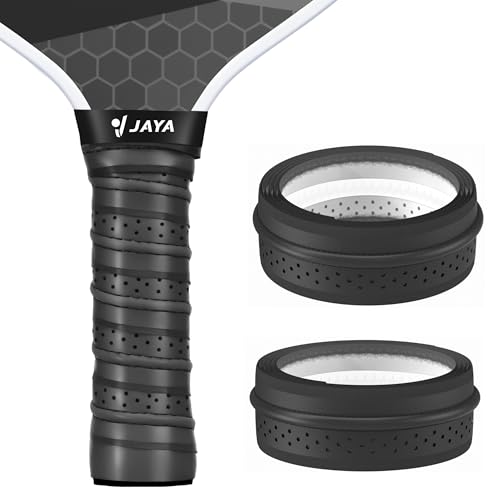 JAYA 2 Pack Extra-Length Pickleball Paddle Grip Tape
  Srikel Pickleball Paddle Overgrip
 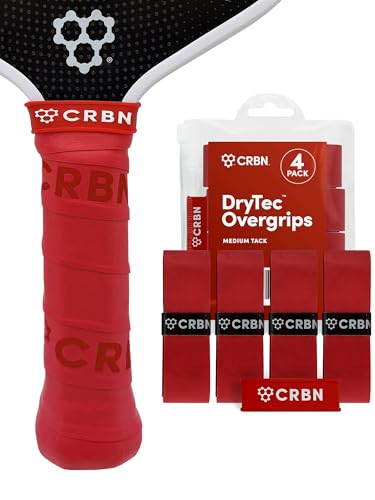 CRBN Pickleball Drytec Overgrips
 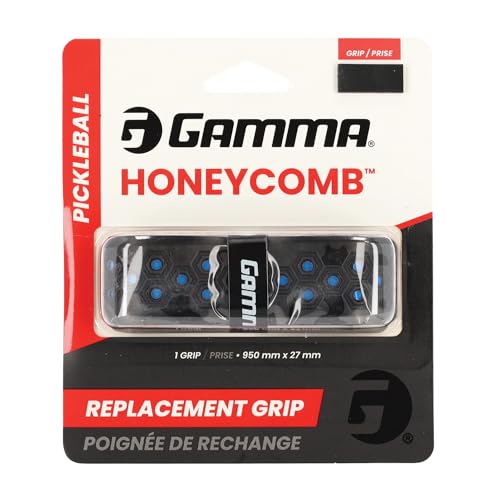 Gamma Honeycomb Cushion Grip for Pickleball Paddles
  JOOLA Pickleball Paddle Replacement Grip Tape
 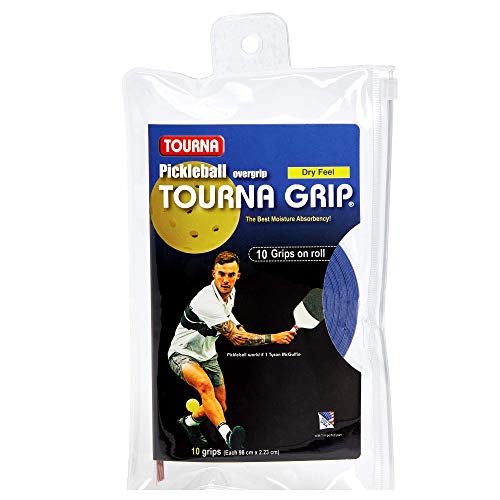 Pickleball Tourna Grip 10 Pack
  Hesacore Pickleball Paddle Grip
 Email me this guide's gear list
Every item on this page with its current price, in one email, so you can shop it later or in pieces. No sales sequence.
Used only to send the list. You can also just read it here.Frequently asked questions
How do I measure my hand for a pickleball grip size?
Hold your dominant hand open with the palm facing up, then measure in a straight line from the middle crease of your palm to the tip of your ring finger. That measurement in inches is your recommended grip circumference. Most adults measure somewhere between 4 and 4.5 inches, with 4.25 inches being the most common size sold.
What is the most common pickleball paddle grip size?
A 4.25 inch grip circumference is the most common size across paddle brands, since it fits the largest share of adult hands. Grip sizes on pickleball paddles generally range from 4 inches up to 4.75 inches, and manufacturers default to 4.25 inches when they only offer one stock size.
Is there a grip size chart based on height?
Yes, though it is only an estimate. Players under about 5 feet 4 inches often fit a 4 to 4.125 inch grip, players between 5 feet 4 inches and 5 feet 10 inches often fit 4.25 inches, and taller players often fit 4.375 to 4.5 inches. Hand size varies independent of height, so confirm with a ruler measurement when possible.
How do I increase pickleball paddle grip size?
Wrap one or more overgrips on top of the existing grip tape. Each layer typically adds a small but noticeable amount to the circumference, roughly 1/32 to 1/16 of an inch per wrap. This is far cheaper than buying a new paddle and lets you fine-tune the exact feel rather than guessing at a fixed factory size.
What grip size should women use for pickleball?
There is no separate sizing rule for women. Grip size should be based on your own hand measurement using the ruler method, not on gender. Many womens hands do measure in the smaller 4 to 4.25 inch range, which is why some paddles marketed toward women ship with a smaller stock grip, but always confirm with your own measurement.
What happens if my pickleball grip is the wrong size?
A grip that is too large makes it harder to control the paddle face and can add strain through the wrist and elbow over time. A grip that is too small can let the paddle twist slightly in your hand on off-center hits, reducing control. Both are fixable after purchase with overgrips or replacement grip tape.
This is researched general guidance, not professional advice. Specs and prices come from manufacturer listings and change often; confirm details on the product page before buying.