Best Pickleball Grips and Overgrips (2026)
The Professor Pickleball P-Tac Overgrip, about $13, is the best all-around overgrip for tacky, sweat-resistant feel at a fair price, and it adds roughly a sixteenth of an inch to your grip circumference once wrapped.

Beginner, intermediate and expert picks
Beginner
 Srikel Pickleball Paddle Overgrip$10.99
A single Srikel overgrip costs about $11 and is the simplest way to freshen a worn or slick factory grip without replacing the whole handle. It is a fine first purchase if you just want more tack and are not trying to change grip size or feel yet.
Check priceIntermediate
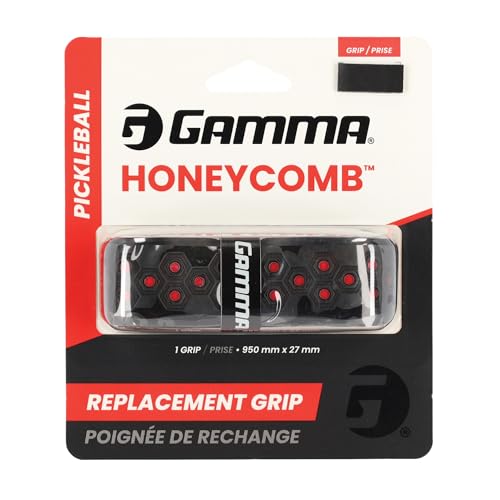 Gamma Honeycomb Cushion Grip for Pickleball Paddles$15.94
The Gamma Honeycomb Cushion Grip costs about $16 and is a full replacement grip rather than a thin overgrip, adding real cushioning under your palm instead of just a tacky outer layer. This is the upgrade once you know a thin overgrip alone is not solving discomfort or slipping.
Check priceExpert
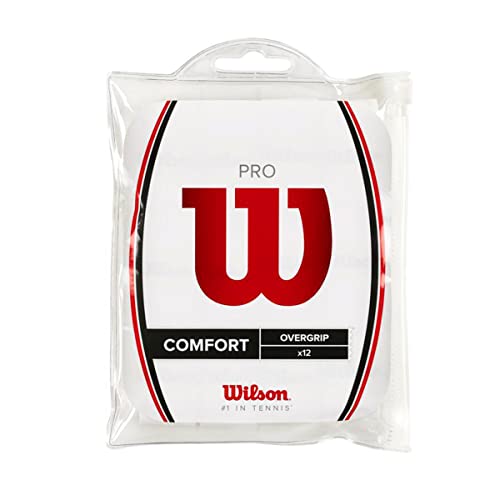 WILSON WRZ4016WH Pro Tennis Overgrip 12-Pack,White$26.99
The Wilson Pro Tennis Overgrip 12-Pack costs about $27, which works out to roughly $2 per grip, the best per-grip value in the catalog for anyone who replaces their overgrip often. A fresh overgrip every few weeks of regular play keeps tack and control consistent, which frequent players notice more than occasional ones.
Skip it if:Skip this if you only play casually and will not go through a dozen grips; a single overgrip or a two-pack is a better fit and you will not be storing ten unused grips in a drawer.
Check priceGrip maintenance is the cheapest, most overlooked upgrade in pickleball. A worn or slick factory grip forces you to squeeze the handle harder to keep control, which tires your forearm faster and can contribute to elbow strain over a long session. Before buying anything here, measure your hand with the grip size calculator, since overgrips, lead tape, and edge guard tape all interact with the size number that calculator gives you.
What does an overgrip actually do?
An overgrip is a thin, tacky wrap applied over your paddle's existing factory grip, meant to be replaced regularly as it wears smooth or absorbs sweat. It restores tack and cushioning without requiring you to strip and replace the entire factory grip underneath, which is a bigger, less frequent job. Most players who play regularly replace an overgrip every few weeks to a couple of months, depending on how much they sweat and how often they play.
How much does an overgrip add to grip size?
A single layer of overgrip typically adds about a sixteenth of an inch to your paddle's grip circumference. That is a small but real change: if your hand measures right between two standard grip sizes using the ruler method, palm crease to ring fingertip, an overgrip can be the difference-maker that bumps a slightly-too-small factory grip up to a comfortable fit, without buying a whole new paddle. Wrapping two overgrips at once roughly doubles that added size, though most players only need one layer.
Overgrip vs. replacement grip: what is the difference?
An overgrip is thin and meant to be replaced often; it adds tack and a small amount of size. A replacement grip, like the Gamma Honeycomb Cushion Grip in the intermediate tier above, replaces the entire factory grip and typically adds real cushioning underneath, changing how the handle feels in your palm rather than just how tacky the surface is. Replacement grips last much longer than overgrips, often the life of the paddle, but they cost more per unit and are a bigger job to install.
How do you apply an overgrip correctly?
Start at the bottom of the handle near the butt cap and wrap upward in overlapping spirals, with each pass covering roughly a third to a half of the previous wrap. Keep light, even tension the whole way up; pulling too hard in spots creates uneven bulges that change how the handle feels in your palm, while wrapping too loosely leaves gaps where the old grip underneath shows through and can peel early. Finish at the top with the built-in finishing tape most overgrips include, and trim any excess rather than leaving a loose tail that unravels during play. It is a two-minute job once you have done it a few times, which is part of why replacing an overgrip regularly is realistic even for players who do not consider themselves handy with gear.
Where should lead tape go for different effects?
Placement changes what the tape actually does to the paddle. Tape applied around the top edge of the face adds swing weight and a bit more pop on drives, at the cost of slightly slower hands at the net, since more mass sits farther from your grip. Tape applied lower on the sides, closer to where the face meets the handle, adds stability and a more solid feel on off-center hits without adding as much to the paddle's overall swing weight. Players chasing more power on drives generally tape the top edge; players chasing more forgiveness and a steadier feel on volleys generally tape the sides lower down. Either way, add small amounts, a few grams at a time, and let yourself get used to each change before adding more.
What does lead tape and edge guard tape do?
Lead tape and edge guard tape solve different problems from grip tape. Lead tape is a thin, weighted strip applied to the paddle face or edge to add mass and shift the balance point, which changes swing weight and can add more drive power or stability depending on placement. Edge guard tape is a protective strip applied around the rim of the paddle face to guard against chips and cracks from clipping the ground or the net post, and it does not meaningfully change weight or feel. Neither one changes your grip size the way an overgrip does; both work on the paddle head instead of the handle.
Adding lead tape increases the paddle's total weight and can shift it toward head-heavy, both of which increase the load on your elbow and shoulder with every swing. If you have any history of tennis elbow or joint pain, add lead tape gradually and in small amounts, and talk to a doctor or physical therapist if you notice new soreness after tuning your paddle's weight.
How many overgrips should you keep on hand?
For a regular player, buying a small multi-pack rather than a single overgrip usually makes more sense once you know you will keep playing, since the per-grip cost drops noticeably in a pack like the Wilson Pro Tennis Overgrip 12-Pack in the expert tier above. Keeping two or three spares in your bag also means you are never stuck playing on a slick, worn grip just because you forgot to reorder, and it lets you swap a grip the moment it starts feeling smooth rather than waiting until you have time to buy a replacement. Casual players who go through a grip every few months are fine buying single overgrips or small two-packs as needed instead, restocking whenever the current one starts feeling slick rather than keeping a large supply on hand that may go unused for a long stretch.
Can you use two overgrips at once for a bigger grip size change?
Yes, and some players do this deliberately when a paddle's factory grip runs noticeably small for their hand and they do not want to buy a new paddle or a full replacement grip. Wrapping a second overgrip over the first roughly doubles the size increase, pushing closer to an eighth of an inch added rather than a sixteenth. The tradeoff is added bulk and a slightly spongier feel under the palm, which some players like for comfort and others find makes fine control harder. Try one layer first and only add a second if the grip still feels too small once the first has settled in.
Comparison table
| Product | Price | Category | What it solves |
|---|---|---|---|
| Srikel Pickleball Paddle Overgrip | about $11 | Overgrip | Fresh tack on a worn grip |
| Professor Pickleball P-Tac Overgrip Black & White | about $13 | Overgrip | Balanced tack and durability |
| Gamma Honeycomb Cushion Grip for Pickleball Paddles | about $16 | Replacement grip | Added cushioning under the palm |
| ArlinaL Lead Tape for Pickleball Paddles | about $9 | Lead tape | Adding weight or shifting balance |
| Srikel Pickleball Edge Guard Tape | about $9 | Edge guard | Protecting the paddle rim from chips |
| WILSON WRZ4016WH Pro Tennis Overgrip 12-Pack,White | about $27 | Overgrip 12-pack | Best per-grip cost for frequent players |
How we chose
We did not test these grips, tapes, or guards ourselves. Every pick comes from published product listings and verified owner reviews on the retail pages, cross-checked to confirm what category of product each one actually is, since some paddle grip components on major retail sites are mislabeled or oddly priced compared to similar items. We built the tiers around genuinely different jobs, a basic overgrip, a cushioned replacement grip, and a bulk multi-pack, rather than three overgrips at slightly different prices, and rounded out the grid with clear lead tape and edge guard options for readers solving a different problem than grip feel.
Buying tips
- Measure grip size before adding an overgrip, not after. An overgrip should fine-tune a close fit, not compensate for a paddle that is clearly the wrong size.
- Replace an overgrip when it starts feeling smooth or slick rather than waiting until it visibly frays; lost tack shows up before visible wear does.
- Add lead tape in small amounts and test it over a few sessions before adding more; a little weight change goes further than it seems like it should.
- Apply edge guard tape early on a new paddle rather than waiting for the first chip; it is cheap insurance against a crack that can end a paddle's life early.
Also worth considering
 Srikel Pickleball Edge Guard Tape
  ArlinaL Lead Tape for Pickleball Paddles
  JOOLA Clear Edge Guard Tape
 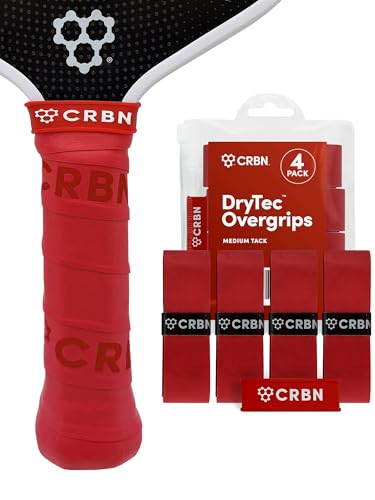 CRBN Pickleball Drytec Overgrips
  Retrora 20pcs Pickleball Lead Tape
  Paddle Tuning Tape for Pickleball Paddles
 Email me these picks
Every item on this page with its current price, in one email, so you can shop it later or in pieces. No sales sequence.
Used only to send the list. You can also just read it here.Frequently asked questions
How much does an overgrip add to pickleball paddle grip size?
A single layer of overgrip typically adds about a sixteenth of an inch to the grip circumference. That is small but useful: if your hand measures right between two standard sizes using the ruler method, one overgrip layer can be enough to turn a slightly-too-small factory grip into a comfortable fit without buying a new paddle.
What is the difference between an overgrip and a replacement grip?
An overgrip is a thin, tacky wrap applied over the existing factory grip, meant to be replaced every few weeks to a couple of months as it wears. A replacement grip swaps out the entire factory grip underneath, usually adding real cushioning, and lasts much longer, often the life of the paddle, but costs more and takes more effort to install.
How often should I replace my pickleball overgrip?
Most regular players replace an overgrip every few weeks to a couple of months, depending on how much they sweat and how often they play. Replace it once it starts feeling smooth or slick rather than waiting for visible fraying, since lost tack affects your control before the grip looks obviously worn.
Does lead tape make a pickleball paddle heavier?
Yes. Lead tape adds real mass to wherever it is applied on the paddle face or edge, which increases total weight and can shift the balance point toward head-heavy depending on placement. A heavier or head-heavy paddle increases the load on your elbow and shoulder with every swing, so add tape gradually and watch for new soreness.
Does edge guard tape change how a paddle plays?
Not meaningfully. Edge guard tape is a thin protective strip around the rim of the paddle face, meant to guard against chips and cracks from clipping the ground or net post. It adds negligible weight and does not change swing feel the way lead tape or a grip change does.
Can I use golf lead tape on a pickleball paddle?
Yes. Lead tape sold for golf clubs and lead tape sold specifically for pickleball paddles are functionally the same weighted adhesive strip, just marketed to different sports. Either works fine for adding weight or adjusting balance on a paddle, so buy whichever is cheaper or easier to find near you.
Researched from published specs and verified owner reviews, not play-tested by us, and not professional advice. Heavier paddles add load on the elbow and shoulder; ask a doctor or physical therapist about joint pain.