How to Add Lead Tape to a Pickleball Paddle
Adding lead tape at 12 o'clock on a paddle mainly raises swing weight for more power, while tape at 3 and 9 o'clock mainly raises twist weight for more stability on off-center hits, usually in small increments of 1 to 4 grams at a time.
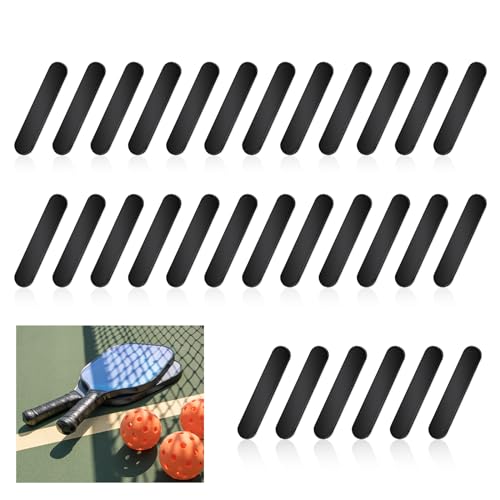
Lead tape is the cheapest, most reversible way to tune a pickleball paddle's weight and balance without buying a new one. A few strips in the right spot can add power, stability, or both, but placement matters more than most beginners realize, since the same amount of tape produces very different effects depending on where it goes. This guide covers the standard clock positions, how much weight players typically add, and how that weight changes swing weight versus twist weight.
Where do you put lead tape on a pickleball paddle?
Paddle tuning is usually described using a clock face laid over the paddle head, with 12 o'clock at the very top of the paddle and 3 and 9 o'clock at the sides. Tape at 12 o'clock sits farthest from the handle, which has an outsized effect on how the paddle feels in motion. Tape at 3 and 9 o'clock sits at the widest points of the paddle face, which affects how the paddle resists twisting rather than how heavy it feels end to end. Most players start with small amounts at one or two of these positions and adjust from there rather than taping the whole edge at once.
What does adding lead tape at 12 o'clock do?
Weight added at the very top of the paddle head increases swing weight, which is the paddle's resistance to being swung from the handle end to the head end. A higher swing weight generally means more mass moving through contact, which can add pop on drives and overheads, at the cost of the paddle feeling slightly slower to bring back into position between shots. Players who want more put-away power on high balls often add a small amount of tape here first.
What does adding lead tape at 3 and 9 o'clock do?
Weight added at the sides of the paddle face increases twist weight, which is the paddle's resistance to rotating around its long axis when the ball hits off-center. A higher twist weight makes off-center or mishit shots feel more stable and less like the paddle twisted in your hand, effectively widening the paddle's usable sweet spot without changing the total swing weight nearly as much as tape at 12 o'clock does. Adding small, matching amounts at both 3 and 9 o'clock keeps the paddle balanced left to right while boosting this stability.
| Position | Primary effect | Typical use |
|---|---|---|
| 12 o'clock (top of head) | Raises swing weight, adds power | Players who want more pop on drives and overheads |
| 3 and 9 o'clock (sides) | Raises twist weight, adds stability | Players who want a more forgiving sweet spot |
| Combination of all three | Raises both swing weight and twist weight | Players chasing an overall more powerful, stable feel |
How much lead tape should I add?
Most lead tape products add somewhere in the range of 1 to 4 grams per inch of strip, and players typically start by adding just 2 to 6 grams total spread across their chosen positions, testing the paddle after each small addition rather than taping on a large amount all at once. Because the effect compounds quickly, especially at 12 o'clock, going straight to a heavy application often makes a paddle feel sluggish rather than simply "more powerful." Adding a strip, hitting for a session, and deciding whether to add more or peel some off is the standard approach.
What is the difference between swing weight and twist weight?
Swing weight measures how heavy the paddle feels as you swing it through the air from handle to head, and it is most affected by weight added far from the handle, like at 12 o'clock. Twist weight measures how much the paddle resists rotating in your hand when the ball strikes off-center, and it is most affected by weight added at the widest side points, like 3 and 9 o'clock. A paddle can have a fairly light overall weight and static balance, yet feel very different in swing weight and twist weight depending entirely on where any added mass sits. For a deeper breakdown of these two numbers, see the guide on swing weight versus twist weight, and check your paddle's numbers with the swing weight calculator.
Does adding weight to a paddle affect elbow or shoulder strain?
Yes, and this is worth taking seriously before adding a large amount of tape. Heavier paddles and paddles with higher swing weight increase the load placed on the elbow and shoulder with every swing, since the arm has to accelerate and decelerate more mass on each shot. Anyone dealing with tennis elbow, golfer's elbow, or general joint pain should add weight cautiously, in small increments, and talk to a doctor or physical therapist if pain develops or worsens after changing paddle weight.
Should you add lead tape to the handle instead of the head?
Some players do add small amounts near the base of the handle or the butt cap, which pulls the balance point back toward the hand rather than out toward the head. This lowers overall swing weight slightly and can make a paddle feel quicker and easier to snap into position for fast net exchanges, at the cost of losing some of the added power that head-weighted tape provides. It is a less common tuning move than head or edge placement, and most players start with the head and edges first before experimenting with handle-end weight.
Do you need to remove old lead tape before adding new tape?
Not always, but it depends on condition. If existing tape is still stuck down flat and is not peeling, many players simply add new tape on top or alongside it rather than fully stripping the paddle. If old tape has started lifting at the edges, it is worth removing and cleaning the surface first, since tape applied over a lifting edge will not stay flush and can catch on the ball or a fence during play. A flat, clean surface also makes it easier to judge exactly how much total weight has been added, which matters if you are trying to track your changes precisely.
Does lead tape actually make a pickleball paddle better?
It depends entirely on what a player is trying to fix. Lead tape does not change a paddle's core material or its fundamental spin or control characteristics; it only changes weight distribution. For a player who finds their paddle too light to generate power, or too twitchy on off-center hits, targeted lead tape placement can genuinely improve feel. For a player who is already happy with their paddle's balance, adding tape without a specific goal in mind is more likely to make the paddle feel heavier without a clear benefit.
How do I know if my paddle needs lead tape at all?
A useful signal is noticing a specific, repeatable complaint rather than a vague sense the paddle "isn't working." If drives and put-aways feel underpowered even with good technique, that points toward more swing weight at 12 o'clock. If off-center hits feel like they twist the paddle out of your hand or produce a much weaker shot than clean center hits, that points toward more twist weight at 3 and 9 o'clock. If neither complaint applies, the paddle likely does not need tuning yet.
What lead tape should I start with?
A pre-cut, standard-gauge tape like AccEncyc 30pcs Lead Tape for Pickleball Paddles 3g Weighted makes it easy to apply consistent, known amounts without guessing at how much a given strip weighs. Budget options like MIGHTY HALO Lead Tape for Pickleball Paddles or DSCMLIS 30PCS Black Lead Tapes work just as well for basic tuning. For players who want to push twist weight up further without adding as much bulk, a denser tungsten-based tape such as Pickleball Effect Weighted Tungsten Tape for Pickleball Paddles packs more weight into a smaller strip, though it costs more than standard lead tape.
Once you have tuned the weight distribution, double check your overall paddle weight against the ranges in pickleball paddle weight explained, and confirm your finished setup still falls within the USA Pickleball paddle rules if you plan to use it in sanctioned play.
Gear mentioned in this guide
 MIGHTY HALO Lead Tape for Pickleball Paddles
  Neobadge Lead Tape for Pickleball Paddles with High-Performance
  DSCMLIS 30PCS Black Lead Tapes
  ArlinaL Lead Tape for Pickleball Paddles
  Retrora 20pcs Pickleball Lead Tape
  Pickleball Effect Weighted Tungsten Tape for Pickleball Paddles
 Email me this guide's gear list
Every item on this page with its current price, in one email, so you can shop it later or in pieces. No sales sequence.
Used only to send the list. You can also just read it here.Frequently asked questions
Where do you put lead tape on a pickleball paddle?
The standard reference is a clock face over the paddle head. Tape at 12 o'clock, the top of the head, mainly raises swing weight for power. Tape at 3 and 9 o'clock, the sides, mainly raises twist weight for stability on off-center hits.
How much lead tape should I add to my paddle?
Most players start with 2 to 6 grams total, added in small strips at a time, since typical lead tape adds roughly 1 to 4 grams per inch. Testing the paddle after each small addition avoids over-taping and making the paddle feel sluggish.
What is the difference between swing weight and twist weight?
Swing weight is the paddle's resistance to being swung end to end, most affected by weight added near the top of the head. Twist weight is the paddle's resistance to rotating when hit off-center, most affected by weight added at the side edges.
Does lead tape make a pickleball paddle better?
It can, if the goal is specific, like adding power through more swing weight or adding forgiveness through more twist weight. It will not change the paddle's core material or spin characteristics, only its weight distribution.
Can adding weight to a paddle cause elbow pain?
It can contribute to it. Heavier paddles and higher swing weight increase the load on the elbow and shoulder with every swing. Anyone with existing tennis elbow, golfer's elbow, or joint pain should add weight in small amounts and consult a doctor or physical therapist if pain appears.
How do I know if my paddle needs lead tape?
Look for a specific complaint rather than a general feeling. Weak drives and overheads point toward adding swing weight at 12 o'clock, while off-center hits that feel twisty or noticeably weaker point toward adding twist weight at 3 and 9 o'clock.
Researched general guidance, not professional or medical advice. Heavier and head-heavy setups add load on the elbow and shoulder; ask a doctor or physical therapist about joint pain.