Best Pickleball Paddles for Tennis Elbow (2026)
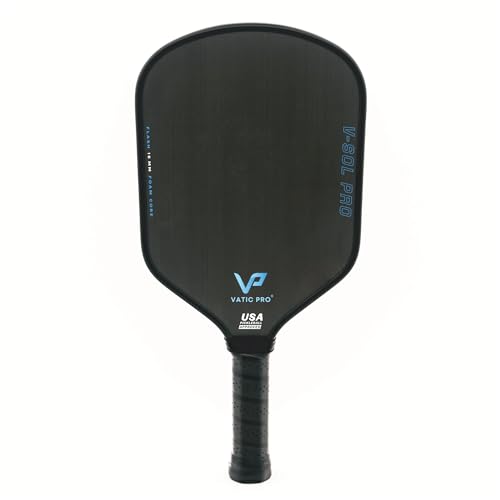
The Vatic Pro V-Sol Pro V7 16mm paddle (about $110) is our top pick for tennis elbow: a midweight, 16mm foam core paddle built to dampen vibration more than a standard polymer honeycomb core of the same thickness.

The Vatic Pro V-Sol Pro V7 16mm paddle replaces the traditional honeycomb core with a foam core at the same 16mm thickness, a construction associated with softer contact and less shock transfer back into the arm. Compared to the Beginner tier, the foam core is the more direct answer to vibration concerns rather than a byproduct of a thick, forgiving build.
16 mm core · elongated shape
Beginner, intermediate and expert picks
Beginner
 JOOLA GRAF Edge 16mm Pickleball Paddle$49.95
The JOOLA GRAF Edge 16mm Pickleball Paddle is a midweight paddle at about 7.8 ounces with a 16mm polymer honeycomb core, a thick, forgiving combination for under $50. It will not dampen vibration quite as well as a dedicated foam core paddle, but it is a reasonable, budget friendly starting point while you figure out whether a paddle change actually helps your arm.
Check priceIntermediate
Vatic Pro V-Sol Pro V7 16mm$109.99The Vatic Pro V-Sol Pro V7 16mm paddle replaces the traditional honeycomb core with a foam core at the same 16mm thickness, a construction associated with softer contact and less shock transfer back into the arm. Compared to the Beginner tier, the foam core is the more direct answer to vibration concerns rather than a byproduct of a thick, forgiving build.
Check priceExpert
 Six Zero Coral Pickleball Paddle$200.00
The Six Zero Coral Pickleball Paddle pairs a 16mm foam core with a carbon fiber face and a midweight build at about 8.15 ounces, aiming to keep the dampening benefit of foam without giving up too much pace. Compared to the Intermediate tier, it is a more refined, tour level build at a price that reflects that finish.
Skip it if:A player chasing maximum pace on drives, since foam core construction generally prioritizes dampening and comfort over raw pop.
Check priceWhat is the best pickleball paddle for tennis elbow?
This is researched from published specifications and verified owner reviews, not medical advice, and anyone dealing with elbow, wrist, or shoulder pain should ask a doctor or physical therapist before changing equipment or technique. With that said, the general pattern reported by players and manufacturers is consistent: a midweight paddle, roughly 7.8 to 8.2 ounces, paired with a 16mm core, either foam or polymer honeycomb, tends to transfer less shock into the arm than a thin, stiff, power oriented paddle. Check your own numbers against the paddle weight calculator before you shop, since weight is the single spec most directly tied to arm strain.
Heavier and head heavy paddles increase the load on the elbow and shoulder with every swing, and a thin, stiff core returns more shock straight back into your arm on every off center hit. Both factors compound, which is why the paddles below cluster around a midweight build and a thicker, softer core rather than either extreme.
Why does paddle weight matter for elbow pain?
Every swing that stops short at contact, rather than following through cleanly, sends some of that stopped energy back up the arm rather than into the ball. A heavier paddle carries more momentum into that contact point, and a head heavy balance concentrates more of that weight away from your hand, both of which increase the jolt an already irritated elbow tendon has to absorb. A midweight paddle, like the JOOLA GRAF Edge 16mm Pickleball Paddle at about 7.8 ounces, keeps that load closer to a moderate baseline. This is general, researched guidance rather than a diagnosis, and it does not replace an actual evaluation from a doctor or physical therapist if your pain is ongoing or severe.
Balance point matters alongside total weight. Two paddles at the same overall ounce figure can feel very different if one concentrates more of that weight toward the head rather than the handle. A head heavy balance, common on paddles built for power, adds pace but also adds swing effort and strain at the elbow with every shot, while a more handle weighted or evenly balanced paddle tends to feel lighter in the hand than its stated weight would suggest. Product listings do not always state balance point directly, so owner reviews mentioning how a paddle feels in the hand, rather than the number alone, are worth reading before you buy.
Does paddle shape affect elbow strain?
Shape plays a smaller role than weight and core thickness, but it is not irrelevant. An elongated paddle adds leverage and encourages a longer, faster swing, which can add more strain per shot than a standard shape if your arm is already sensitive. A standard or widebody shape, like the one on several paddles in this list, keeps the swing shorter and the sweet spot wider, which reduces how often you make the kind of off center contact that sends extra shock back up the arm. If you already know shape is a factor for you, our paddle shape guide compares the three families directly.
Playing surface matters too, even though it is not a paddle spec. Outdoor courts are typically harder, unforgiving concrete or asphalt, while many indoor facilities use a cushioned or sprung floor. A harder surface generally means a harder, faster ball and more jarring off center hits, so if your elbow pain is worse after outdoor sessions, that may be as much about the court as the paddle. Our indoor vs outdoor ball guide covers how the balls themselves differ in hardness between the two settings.
Foam core vs polymer honeycomb for vibration
Foam core construction is a newer alternative to the traditional polymer honeycomb core found in most paddles, and it is commonly marketed around softer contact and reduced vibration at a given thickness. The Vatic Pro V-Sol Pro V7 16mm paddle and the Vatic Pro V-Sol Pro Flash paddle both use a 16mm foam core, as does the Six Zero Coral Pickleball Paddle at the same thickness. A polymer honeycomb core at 16mm, like the one on the JOOLA GRAF Edge 16mm Pickleball Paddle or the JOOLA GRAF Pro IV 16mm Pickleball Paddle w/Extended Sweet Spot, is still a reasonable, more widely available option and is generally softer than a thin power core regardless of the exact core material. Neither foam nor honeycomb is a guaranteed fix for existing elbow pain, and switching materials is not a substitute for proper diagnosis and treatment from a medical professional.
What paddle thickness helps with joint pain?
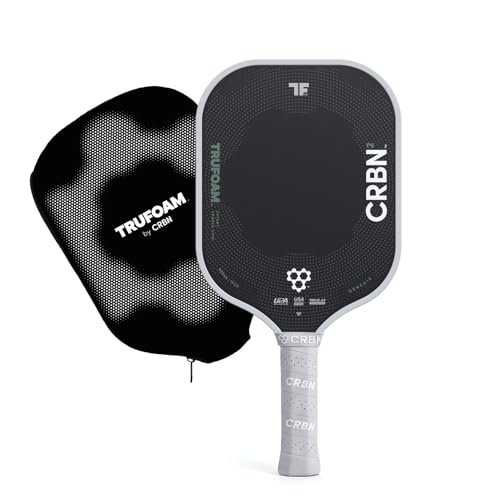
A thicker core, 16mm and up, generally flexes more at contact than a thin 10mm to 14mm core, which spreads out the impact rather than returning it sharply. That is the same property that makes thick cores good for control, and it happens to also reduce the jolt transferred back into the arm on a mistimed or off center hit. The CRBN Pickleball TruFoam Genesis and CRBN Pickleball TruFoam Waves Paddle both use a 14mm core, thinner than the other paddles here, and are worth comparing directly if you want more pace than a 16mm paddle offers while still getting some of the dampening benefit associated with foam construction. Our core thickness guide covers this tradeoff in more depth.
How much should you spend on an elbow friendly paddle?
You do not need to spend $200 to get a midweight, thicker core paddle that is reasonable for a sensitive arm. The JOOLA GRAF Edge 16mm Pickleball Paddle delivers a 16mm polymer honeycomb core at about 7.8 ounces for under $50, which covers the two specs that matter most, weight and thickness, without requiring a foam core specifically. If you do want to try a foam core directly, the Vatic Pro V-Sol Pro Flash and Vatic Pro V-Sol Pro V7 16mm paddles both sit around $110, well under the $200 mark of the more premium foam builds like the Six Zero Coral Pickleball Paddle or the HEAD Gravity PRO EX15 2026 Pickleball Paddle.
Tennis elbow paddle options compared
| Paddle | Price | Weight | Core | Best for |
|---|---|---|---|---|
| JOOLA GRAF Edge 16mm Pickleball Paddle | about $50 | 7.8 oz | 16mm polymer honeycomb | Budget entry, midweight and thick |
| Vatic Pro V-Sol Pro V7 16mm | about $110 | Not stated | 16mm foam | Direct foam core dampening option |
| Six Zero Coral Pickleball Paddle | about $200 | 8.15 oz | 16mm foam | Foam core with more refined pace |
| HEAD Gravity PRO EX15 2026 Pickleball Paddle | about $200 | 8.3 oz | Foam | Premium foam build with carbon face |
How we chose these paddles
We did not play test these paddles in person, and nothing here is medical advice. We prioritized paddles with a published midweight range, roughly 7.8 to 8.3 ounces, and a stated 16mm or comparable core, with a preference for listings that specifically state a foam core given its association with reduced vibration. Where a listing did not state a weight or core material, we left that field out rather than guess. Everything here is pulled from manufacturer specifications, USA Pickleball's approved paddle records where applicable, and verified owner reviews, and none of it substitutes for an evaluation by a doctor or physical therapist if you are managing an existing injury.
Buying tips if you are managing elbow or joint pain
An elbow brace alongside a paddle change is a common, low cost step many players report using together, though this is general information rather than a treatment recommendation. Overgrip thickness can help too. A slightly thicker or tackier grip reduces how hard you have to squeeze the handle, and excess grip pressure is a contributor to elbow strain independent of the paddle itself. Most importantly, if pain is already present and not improving, a paddle swap alone is not a substitute for seeing a doctor or physical therapist, since ongoing tendon pain can get worse with continued play regardless of equipment.
It also helps to look at technique alongside equipment, even in a gear focused guide like this one. A significant share of reported elbow strain in racquet sports comes from leading with a bent wrist and a locked elbow on contact rather than a relaxed arm and a full follow through, and no paddle change fully compensates for that pattern. If your pain started or got worse after a specific change, a new paddle, more frequent play, or a new serve motion, mentioning that detail to a physical therapist can help them narrow down the actual cause faster than guessing from the paddle alone.
Frequently asked questions
Also worth considering
 Vatic Pro V-Sol Pro Flash Full spec sheet
  Selkirk Sport SLK Dauntless Pickleball Paddles Full spec sheet
  CRBN Pickleball TruFoam Genesis Full spec sheet
  HEAD Gravity PRO EX15 2026 Pickleball Paddle Full spec sheet
  CRBN Pickleball TruFoam Waves Paddle Full spec sheet
  JOOLA GRAF Pro IV 16mm Pickleball Paddle w/Extended Sweet Spot Full spec sheet
 Email me these picks
Every item on this page with its current price, in one email, so you can shop it later or in pieces. No sales sequence.
Used only to send the list. You can also just read it here.Frequently asked questions
What is the best pickleball paddle for tennis elbow?
A midweight paddle, roughly 7.8 to 8.2 ounces, with a 16mm foam or polymer honeycomb core is the general pattern reported for reduced vibration and arm strain. The Vatic Pro V-Sol Pro V7 16mm paddle, about $110, is a straightforward example with a foam core at that thickness. This is researched guidance, not medical advice, so consult a doctor or physical therapist for ongoing pain.
Does paddle weight affect tennis elbow?
Yes. Heavier and head heavy paddles increase the load on the elbow and shoulder with every swing, since more mass and momentum stop at contact and send shock back up the arm. A midweight paddle, 7.8 to 8.2 ounces, is the commonly recommended starting point for players managing elbow pain, though a doctor or physical therapist should weigh in on your specific case.
Does a foam core paddle really help with elbow pain?
Foam core paddles are generally marketed around softer contact and reduced vibration compared to a traditional polymer honeycomb core, and many players managing joint pain report choosing them for that reason. This is based on published product claims and owner reviews rather than clinical testing, so treat it as one factor among several rather than a guaranteed fix.
Is a thicker or thinner paddle better for tennis elbow?
A thicker core, generally 16mm and up, tends to flex more at contact and spreads out impact rather than returning it sharply, which is the same property that makes thick cores popular for reducing arm strain. A thin, stiff power core, 10mm to 14mm, transfers more shock back into the arm on off center hits.
Should I see a doctor before switching paddles for elbow pain?
If you have ongoing or worsening elbow, wrist, or shoulder pain, yes, see a doctor or physical therapist before assuming a paddle change alone will resolve it. A different paddle may reduce strain going forward, but it does not replace a proper diagnosis, and continued play through worsening pain can make an existing injury worse regardless of equipment.
Can grip size make elbow pain worse?
Yes, indirectly. A grip that is too small forces extra squeezing to control the paddle, and that added grip pressure is a contributor to elbow strain independent of the paddle’s weight or core. Measuring your hand and choosing an appropriately sized grip, alongside considering an overgrip, is a reasonable low cost step alongside any paddle change.
Researched from published specs and verified owner reviews, not play-tested by us, and not professional advice. Heavier paddles add load on the elbow and shoulder; ask a doctor or physical therapist about joint pain.