Best Pickleball Paddles for Seniors (2026)
The Onix Evoke Premier CT-16 widebody, about $100, is the best all-around senior pick because its wider, more forgiving face and polymer honeycomb core cut down on the arm strain that heavier, smaller-faced paddles cause.

The Onix Evoke Premier CT-16 is a widebody paddle with a polymer honeycomb core for about $100. It keeps the forgiving wide face while adding more consistent pop than an entry paddle, and Onix is one of the more established names for durability over years of regular play.
widebody shape
Beginner, intermediate and expert picks
Beginner
 niupipo Pickleball Paddle widebody$35.99
The niupipo widebody costs about $36 and weighs 7.6 ounces, which is on the light end and easy on a slower or recovering swing. The wider face forgives off-center contact, which matters more for a beginner senior player than raw power does. Moving up a tier buys you a stiffer, more consistent face material and a bigger, more established brand support network.
Check priceIntermediate
Onix Evoke Premier CT-16 Premier Pickleball Paddle$99.99The Onix Evoke Premier CT-16 is a widebody paddle with a polymer honeycomb core for about $100. It keeps the forgiving wide face while adding more consistent pop than an entry paddle, and Onix is one of the more established names for durability over years of regular play.
Check priceExpert
 Six Zero Coral Pickleball Paddle 16mm widebody$200.00
The Six Zero Coral 16mm widebody weighs 8.15 ounces, uses a carbon fiber face over a foam core, and costs about $200. The foam core changes the feel toward a more solid, connected hit with a bit less give than a honeycomb core, which experienced senior players who want more power without giving up the widebody forgiveness tend to like.
Skip it if:Skip this if you have any elbow or shoulder soreness; at 8.15 ounces with a stiffer foam core, this paddle transmits more shock into your arm on off-center hits than the lighter picks above it, and a doctor or physical therapist should weigh in first.
Check priceThe paddle choices that matter most for senior players are weight and face width, not brand name. A lighter paddle with a wider, more forgiving face reduces how hard your arm has to work on every swing and how often a slightly off-center shot costs you the point. Start with the paddle weight calculator to see how your current paddle compares before you decide whether to go lighter.
What paddle weight is easiest on a senior player's joints?
Midweight paddles run roughly 7.8 to 8.2 ounces, light paddles sit under 7.7 ounces, and heavy paddles start at 8.3 ounces and up. There is no rule that senior players must use the lightest paddle available, but a heavier or head-heavy paddle increases the load your elbow and shoulder absorb on every swing, and that load adds up over a long rally or a long session. If you have any history of tennis elbow, rotator cuff issues, or general joint pain, talk to a doctor or physical therapist before choosing paddle weight, and lean toward the lighter end of the range until you know how your arm responds.
Every pick on this page sits between 7.6 and 8.15 ounces, which keeps all three tiers in the light-to-midweight band rather than pushing into heavy territory just to add power.
Why does a widebody paddle matter for seniors?
A widebody paddle is shorter and wider than a standard or elongated paddle, which spreads the sweet spot across more of the face. That matters most when reaction time at the net has slowed a little, because a widebody paddle forgives a shot hit an inch off center far better than a narrow elongated paddle does. The tradeoff is a bit less reach on wide shots and slightly less paddle-head speed on serves, which most senior players trade away happily in exchange for consistency. Every tier above is a widebody paddle for exactly this reason.
Thick or thin core: which feels softer on impact?
Pickleball paddle cores typically run 13 to 16 millimeters thick. A thicker core, closer to 16mm, absorbs more shock and gives a softer, more controlled feel, which is usually the more comfortable choice for sensitive joints. A thinner core, closer to 13mm, transmits more of the ball's energy back into your arm but returns more pop on drives. If your priority is comfort over power, favor the thicker end of that range, which is where the Onix Evoke Premier CT-16 and the Six Zero Coral 16mm both sit.
Does paddle length or reach matter if mobility is limited?
It can, more than most senior players expect going in. A shorter, wider widebody paddle sacrifices some reach for stability and forgiveness, which is usually the right tradeoff if quick lateral steps or lunging for wide balls has become harder. An elongated paddle adds reach that can partially make up for slower footwork by letting you cover more court without moving your feet as far, at the cost of a smaller sweet spot that punishes off-center contact more. There is no single right answer here; a player with strong footwork but a sore shoulder might prefer the shorter, wider paddle for comfort, while a player with good arm strength but limited leg mobility might prefer the added reach of an elongated shape despite giving up some forgiveness. Try to test both shapes if you can before committing to one at a higher price point, and remember that a paddle you can borrow from a friend or demo at a local pro shop tells you far more about fit than a spec sheet alone ever will, and most players change their mind at least once after actually holding a paddle in their hand.
Do I need a lighter paddle if I already have elbow pain?
If you already have diagnosed tennis elbow or ongoing joint pain, weight and core stiffness both matter, and this is a conversation worth having with a doctor or physical therapist before you spend money on a new paddle. In general, lighter weight, a thicker core for more cushion, and a widebody shape for more forgiveness are the three changes that tend to reduce strain the most. See our dedicated paddles for tennis elbow list if that is your primary concern rather than general senior play.
Should seniors prioritize a control paddle over a power paddle?
For most senior players, yes. A control-oriented paddle, usually built with a thicker core and a softer face response, gives you more consistent placement on dinks and resets at the kitchen line, which is where most points at any level of senior play are actually decided. A power-oriented paddle trades some of that control for harder drives, which matters more in faster-paced competitive play than in the social and league doubles most senior players focus on. None of this means you cannot play a power paddle if you already swing comfortably and want more pace on your shots; it simply means control is the safer default recommendation when you are choosing between two paddles at a similar weight.
Does weaker grip strength change what paddle to buy?
It changes the handle more than the paddle head. If arthritis or general grip fatigue is a concern, a slightly larger grip circumference, in the 4.5 to 4.75 inch range, reduces how hard you need to squeeze to keep the paddle stable through contact, since your fingers do not have to close as far around the handle. A grip that is too small forces extra squeeze force through your hand on every shot, which tires the same muscles that control your grip over a full session. Measure with the grip size calculator and lean toward the larger end of your measured range if grip fatigue has been a problem, then add an overgrip for extra tack rather than squeezing harder to compensate for a slick handle.
Comparison table
| Paddle | Price | Weight | Shape | Core |
|---|---|---|---|---|
| niupipo Pickleball Paddle widebody | about $36 | 7.6 oz | Widebody | Not listed |
| Onix Evoke Premier CT-16 Premier Pickleball Paddle | about $100 | Not listed | Widebody | Polymer honeycomb |
| Onix Legacy Pickleball Paddles | about $61 | Not listed | Widebody | Polymer honeycomb |
| Engage Pursuit Pro EX Pickleball Paddle | about $170 | 8.1 oz | Widebody | Not listed |
| Six Zero Coral Pickleball Paddle 16mm widebody | about $200 | 8.15 oz | Widebody | Foam |
How we chose
We did not play-test these paddles in person. Every pick here comes from published manufacturer specifications, USA Pickleball's paddle approval listings, and verified owner reviews on the retail listings themselves. We filtered the catalog to widebody paddles at or under 8.2 ounces, which is the combination most likely to reduce arm strain and forgive off-center contact, and left out any listing that did not publish a weight, thickness, or core we could verify. Where a spec was not published by the manufacturer, we left it blank rather than guessing.
Buying tips
- Prioritize weight and shape over brand reputation. A lighter, wider paddle from a smaller brand will feel better on your arm than a heavy paddle from a famous one.
- If you play doubles most of the time, forgiveness at the net matters more than reach, which favors a widebody shape over elongated.
- Check your grip size with the grip size calculator too. A grip that is too small forces extra squeeze force through your hand and forearm on every shot.
- Ease into a heavier or stiffer paddle gradually rather than switching all at once, and stop if you notice new elbow or shoulder soreness.
- Warm up your wrist, forearm, and shoulder before playing, especially if you have gone a few days without swinging a paddle. A cold joint absorbs more shock on the first few hard hits of a session than a warmed-up one does.
- Consider court surface too, not just the paddle. If you are building or refreshing a home court, our court size calculator can help you plan a layout that keeps travel distance reasonable between points and reduces unnecessary running for everyone on it.
Also worth considering
 Onix Legacy Pickleball Paddles Full spec sheet
  Onix Pickleball Evoke Premier CT-16 Pickleball Paddle Full spec sheet
  Onix Premium Pickleball Paddles Full spec sheet
  Engage Pursuit Pro EX Pickleball Paddle Full spec sheet
 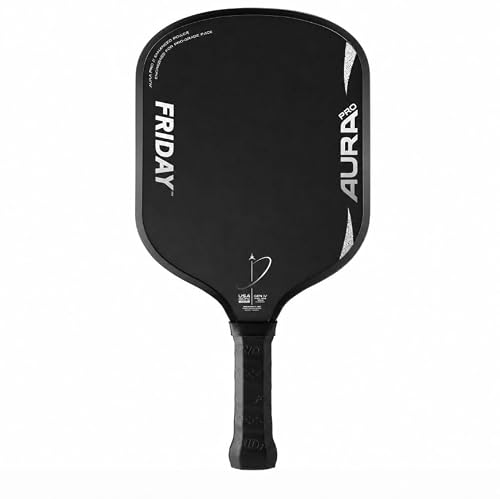 FRIDAY Aura Pro Pickleball Paddle Wide Body Full spec sheet
 Email me these picks
Every item on this page with its current price, in one email, so you can shop it later or in pieces. No sales sequence.
Used only to send the list. You can also just read it here.Frequently asked questions
What is the best pickleball paddle weight for seniors?
Most senior players are best served by a light-to-mid weight paddle between about 7.6 and 8.2 ounces. Lighter paddles react faster at the net and put less strain on the elbow and shoulder over a long session. Heavier paddles above 8.3 ounces add power but increase joint load, so they suit players without joint concerns more than players managing existing pain.
Why do widebody paddles help senior pickleball players?
A widebody paddle is shorter and wider than a standard paddle, which spreads the sweet spot across more of the face. That means a shot hit slightly off center still returns decent pace and control, which matters when reaction time at the net has slowed. The tradeoff is a little less reach than an elongated paddle offers.
Can a heavy pickleball paddle cause tennis elbow?
A heavier or head-heavy paddle increases the load your elbow and shoulder absorb on every swing, which can contribute to or worsen tennis elbow style pain over repeated sessions. If you already have joint pain or a history of tennis elbow, choose a lighter paddle and consult a doctor or physical therapist before committing to a heavier one.
Does a thicker paddle core feel softer to hit with?
Generally yes. Pickleball cores run 13 to 16 millimeters, and a thicker core near 16mm absorbs more shock and gives a softer, more controlled feel, which many players with joint sensitivity prefer. A thinner core near 13mm transmits more energy back through the paddle for extra pop, at the cost of a firmer feel on contact.
Should a senior player buy the lightest paddle available?
Not necessarily. The lightest paddle is easiest to maneuver but often trades away some stability and power on drives. Most senior players do better with a light-to-mid weight paddle in the 7.6 to 8.2 ounce range paired with a widebody shape, rather than chasing the single lightest option on the market for its own sake.
What paddle shape is most forgiving for a slower reaction time?
Widebody paddles are the most forgiving shape because they spread the sweet spot across a wider face, which helps when a shot is hit an inch or two off center. Elongated paddles add reach and serve speed but shrink the sweet spot, which rewards precise contact more than forgiveness at the net.
Researched from published specs and verified owner reviews, not play-tested by us, and not professional advice. Heavier paddles add load on the elbow and shoulder; ask a doctor or physical therapist about joint pain.