Indoor vs Outdoor Pickleball Balls: Key Differences
Outdoor pickleballs typically have 40 smaller holes and a harder, heavier build for wind resistance on asphalt or concrete, while indoor balls typically have 26 larger holes and a softer, lighter build for gym floors.

Pickleball's plastic, perforated ball looks like one simple product, but indoor and outdoor versions are built quite differently, and using the wrong one changes how the game feels more than most new players expect. This guide covers the actual construction differences, which surfaces each ball is meant for, and roughly how long a ball lasts before it needs replacing.
What is the difference between indoor and outdoor pickleball balls?
The biggest visible difference is hole count. Outdoor balls typically have 40 smaller holes, while indoor balls typically have 26 larger holes. That difference exists because of wind: outdoor play happens in open air where a gust can meaningfully affect a light plastic ball in flight, so outdoor balls are built harder and slightly heavier with more, smaller holes to resist wind and hold a truer flight path. Indoor courts have no wind to fight, so indoor balls are softer and lighter, with fewer, larger holes, which produces a slower, more controlled bounce suited to a gym floor.
How many holes does an indoor pickleball have?
Indoor balls are almost always built with 26 holes. This lower hole count, combined with a softer plastic, gives the ball less structural rigidity in the air, which is intentional since indoor rallies do not need to fight crosswinds the way outdoor rallies do.
How many holes does an outdoor pickleball have?
Outdoor balls are almost always built with 40 holes. The smaller, more numerous holes combined with a harder plastic compound make the ball more resistant to wind drift and better able to survive being smashed onto rough asphalt or concrete without deforming as quickly.
Are outdoor balls harder and heavier than indoor balls?
Yes, generally. Outdoor balls use a harder plastic and tend to run slightly heavier than indoor balls, both of which help the ball hold its flight path outside and survive abrasive court surfaces. Indoor balls use a softer plastic that flexes more on contact, which suits the smoother, lower-impact surface of an indoor gym floor and produces a gentler bounce for indoor play.
| Feature | Outdoor ball | Indoor ball |
|---|---|---|
| Typical hole count | 40 | 26 |
| Hardness | Harder plastic | Softer plastic |
| Weight | Slightly heavier | Slightly lighter |
| Best surface | Asphalt, concrete | Wood, sport court gym floors |
| Wind resistance | Built to resist wind drift | Not a design factor |
What surfaces should each ball be used on?
Outdoor balls are made for asphalt, concrete, and other rough exterior court surfaces, where their harder shell holds up to repeated impact and abrasion. Indoor balls are made for wood or coated sport court gym floors, where the surface itself is smoother and does not chew up the ball's plastic the way rough pavement does. Using an indoor ball outdoors on asphalt tends to wear it out and can crack the softer plastic faster than intended, while using an outdoor ball indoors often plays too fast and bounces less predictably for a smaller gym space.
Can you use outdoor pickleballs indoors, or indoor balls outdoors?
You can in a pinch, but the play experience changes. An outdoor ball used indoors tends to feel livelier and less controlled on a gym floor than the indoor ball the space was designed around. An indoor ball used outdoors tends to catch more wind and wear out faster against pavement than an outdoor-rated ball would. For casual, mixed-use play neither swap is dangerous, but if you are practicing for a specific setting, matching the ball to the surface makes a noticeable difference in how the game feels.
How long do pickleball balls last?
It depends heavily on the surface and how often the balls are used. Outdoor balls played regularly on rough asphalt, especially by players who hit hard and often clip curbs, fences, or pavement on mishits, tend to develop cracks or go noticeably softer within a few weeks to a couple of months of frequent play, based on published product guidance and widely reported owner reviews rather than any in-house testing. Indoor balls used on a gym floor, which is far gentler on the plastic, often last considerably longer under similar play frequency, sometimes stretching to several months or longer before they crack or lose bounce consistency. A ball that develops a visible crack, a flat spot, or a noticeably dead bounce compared to a fresh one from the same pack should be retired, since a damaged ball plays unpredictably and can affect line calls.
Does color signal whether a ball is indoor or outdoor?
Not reliably on its own. Outdoor balls are commonly sold in bright optic yellow or orange for visibility against sky and pavement, and many indoor balls also use bright colors like yellow, orange, or white to stand out against a gym floor. Color is chosen mainly for visibility in whatever setting the ball is meant for, not as a strict labeling system, so the safest way to tell indoor and outdoor balls apart is still the hole count and the packaging description rather than color alone.
Does cold weather affect how a pickleball ball plays?
Yes, especially for outdoor balls. Plastic naturally stiffens in cold temperatures, and an outdoor ball played in cold weather can feel harder and bounce less predictably than the same ball on a warm day, sometimes becoming more prone to cracking on hard impacts. Some manufacturers sell balls specifically marketed for cold-weather play, built with a plastic blend meant to stay more consistent as temperatures drop. Indoor balls are less affected by this since gym temperatures stay relatively stable year-round, which is another practical reason indoor and outdoor balls are engineered differently rather than interchangeably.
Do all outdoor and indoor balls follow official USA Pickleball specifications?
Many, but not all. USA Pickleball maintains an approved equipment list, and manufacturers submit balls for testing against specifications covering size, weight, bounce, and hardness. Balls labeled as tournament or USAPA approved on their packaging have gone through that process; balls sold purely as casual or backyard balls sometimes have not, though they can still play perfectly well for recreational use. If you are buying for club play or a league, checking that a ball is labeled approved is worth the extra look.
Does storage affect how long a pickleball ball lasts?
Yes, in a smaller but still meaningful way. Leaving balls sitting in a hot car or in direct sun for long stretches can accelerate the plastic aging that eventually leads to cracking, since heat and UV exposure both break down plastic over time even when the ball is not being played with. Storing a set of balls in a cool, shaded spot, such as inside a bag or a covered container rather than loose in a sunny trunk between sessions, is a simple way to get more usable life out of a batch before hole count and hardness differences even come into play. This matters more for outdoor balls, which already sit outside for most of their working life, than for indoor balls, which typically only leave a climate-controlled gym for the trip to and from a player's bag.
Which ball should a beginner start with?
Most beginners will spend more time playing outdoors, whether that is a driveway, a park court, or a converted tennis court, so starting with a reputable outdoor ball like Franklin Sports X-40 USAPA Approved Tournament Pickleballs or a widely used option such as Franklin Sports Pickleball-x Performance 40 Outdoor Balls-Optic covers the majority of casual play situations. Anyone joining an indoor league or club should pick up a dedicated indoor ball instead, such as HEAD Championship 26 Indoor or Onix Recruit Ready-to-Play Indoor Pickleball Balls, rather than assuming an outdoor ball will feel the same on a gym floor.
For a full breakdown of ball counts, hole patterns, and approved models by category, see the pickleball ball chart, and if you are stocking up for group play, the ball count calculator helps figure out how many to buy for a session.
Gear mentioned in this guide
 HEAD Championship 26 Indoor
  Onix Recruit Ready-to-Play Indoor Pickleball Balls
 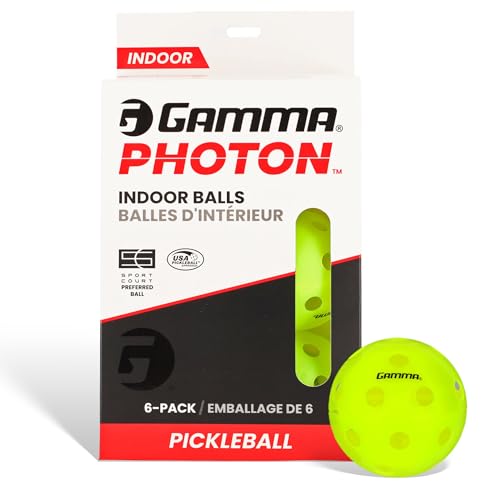 Gamma Photon Indoor Pickleballs Pack of 6
  Franklin Sports Pickleball-x Performance 40 Outdoor Balls-Optic
  Dura Fast 40 Pickleballs Outdoor pickleball balls
  Selkirk Sport Pro S1 Ball
 Email me this guide's gear list
Every item on this page with its current price, in one email, so you can shop it later or in pieces. No sales sequence.
Used only to send the list. You can also just read it here.Frequently asked questions
What is the difference between indoor and outdoor pickleball balls?
Outdoor balls typically have 40 smaller holes and a harder, slightly heavier build for wind resistance and durability on rough pavement. Indoor balls typically have 26 larger holes and a softer, lighter build suited to a smooth gym floor.
How many holes does an indoor pickleball have?
Indoor pickleballs are almost always built with 26 holes, larger than the holes on an outdoor ball. This lower hole count and softer plastic suit the gentler, wind-free environment of an indoor gym floor.
Can you use outdoor pickleballs indoors?
You can, though the ball will usually feel livelier and bounce less predictably on a gym floor than a dedicated indoor ball. It will not damage the court, but it changes the pace of the game noticeably.
How long do pickleball balls last?
Outdoor balls played frequently on asphalt often show cracks or a dead bounce within a few weeks to a couple of months, based on published guidance and common owner reviews. Indoor balls used on gentler gym floors typically last longer under similar use.
Do outdoor pickleballs crack easily?
They can, especially with frequent hard play on rough asphalt or concrete, or repeated impacts against curbs and fences. A visible crack, flat spot, or noticeably dead bounce compared to a fresh ball means it is time to replace it.
Which pickleball balls are USA Pickleball approved?
USA Pickleball maintains an approved equipment list, and manufacturers submit balls for testing on size, weight, bounce, and hardness. Balls marketed as tournament or USAPA approved on their packaging have passed that process; casual balls may not carry that label.
This is researched general guidance, not professional advice. Specs and prices come from manufacturer listings and change often; confirm details on the product page before buying.