Best Pickleball Ball Machines (2026)
The Posboll Pickleball Machine Ball Thrower (about $299.99) is the best all-around pickleball ball machine for most players, pairing remote control feeding with a price well below the app-controlled premium tier.

The Posboll Pickleball Machine Ball Thrower (about $299.99) is only a modest step up in price from the beginner tier but is the machine most often recommended as a solid all-around choice, which is why it is also the top pick in this guide.
Beginner, intermediate and expert picks
Beginner
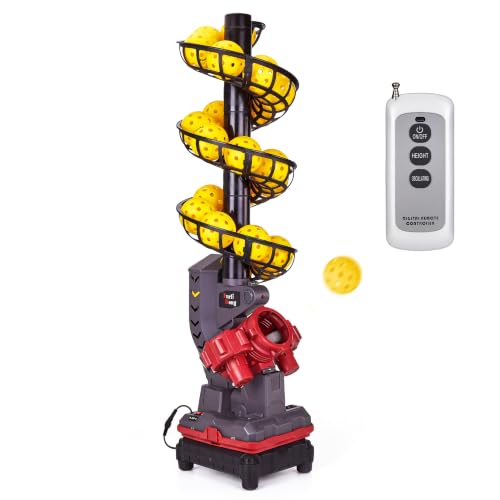 Furlihong 3816PBH Pickleball Machine with Remote Control$254.99
The Furlihong 3816PBH (about $254.99) is the least expensive ball machine in this range and comes with remote control operation, making it a reasonable entry point for someone who wants solo practice reps without committing to a premium machine right away.
Check priceIntermediate
Posboll Pickleball Machine Ball Thrower$299.99The Posboll Pickleball Machine Ball Thrower (about $299.99) is only a modest step up in price from the beginner tier but is the machine most often recommended as a solid all-around choice, which is why it is also the top pick in this guide.
Check priceExpert
 PUSUN PP-SMART Advanced Pickleball Machine$1078.00
The PUSUN PP-SMART Advanced Pickleball Machine (about $1,078) is a major jump in price from the two tiers above, reflecting a more advanced feed system and app-based control aimed at serious, frequent training.
Skip it if:Casual or social players who play once or twice a week should not buy this tier. The price only makes sense for players training several times a week, or for coaches and clubs running repeated group drills where the machine gets heavy, regular use.
Check priceA pickleball ball machine is a serious investment compared to most gear on this site, and it is not the right purchase for every player. Before buying, it is worth checking your court size calculator results to confirm you actually have enough room to feed and retrieve balls safely, and reading the honest breakdown below of who should skip this category entirely.
Who actually needs a pickleball ball machine?
Ball machines make the most sense for players who want to drill a specific shot repeatedly, such as a dink, a third-shot drop, or an overhead, without needing a practice partner to feed balls consistently. They are also useful for coaches running group clinics. They make far less sense for someone who mainly plays doubles socially once or twice a week, since that player will get more improvement per dollar from lessons, a practice partner, or simply playing more matches. If you are not sure a machine fits your routine, it is worth borrowing one or trying a club's machine before spending several hundred dollars.
How much does a good pickleball ball machine cost?
In this category, prices run from about $254.99 for an entry-level remote-controlled machine like the Furlihong 3816PBH up to roughly $1,078.99 for the app-controlled PUSUN Smart Pickleball Machine, and past $2,000 for pickleball-specific Titan machines such as the Titan ONE and Titan ACE. The middle of the range, around $300 to $600, covers machines like the Posboll Pickleball Machine Ball Thrower and the Generic JP02 Portable Pickleball Machine, which add more consistent feed control without the full premium feature set.
Entry-level vs premium ball machines: what actually changes?
| Machine | Price | Control | Best for |
|---|---|---|---|
| Furlihong 3816PBH | $254.99 | Remote control | First-time buyers testing whether a machine fits their routine |
| Posboll Ball Thrower | $299.99 | Remote control | Most players wanting a dependable all-around machine |
| Generic JP02 Portable | $589.99 | Portable design | Buyers who move the machine between courts often |
| PUSUN PP-SMART Advanced | $1,078 | App and remote control | Serious, frequent training or coaching use |
| PUSUN Smart with App & Remote | $1,078.99 | App and remote control | Players who want detailed control over feed patterns via an app |
The jump from entry-level to premium is mostly about feed consistency, oscillation and spin control, and remote or app-based programming rather than raw ball speed. If you only need straight, repeatable feeds for basic drilling, the entry and mid tiers cover that well.
What do you need besides the machine itself?
A ball machine is only as useful as your ball supply and your ability to collect balls afterward. Budget for a bulk pack of balls, such as the Dura Fast 40 for outdoor sessions or one of the options in our best outdoor pickleball balls guide, since machines go through balls quickly during a real practice session. Use the ball count calculator to estimate how many you will burn through in a typical week of drilling. You will also want a way to gather balls back up between drills rather than picking each one up by hand, and a bag with room for a retrieval tool is worth reviewing in our best pickleball bags guide. A retrieval tool like the Franklin Sports Pickleball Retrieval Tube works well for smaller sessions, while a larger option like the YooKoo Pickleball Hopper for 100 Balls is worth the extra cost if you are running longer solo sessions or group drills where dozens of balls end up scattered across the court.
Where should you use a ball machine, indoors or outdoors?
Most consumer ball machines are designed primarily for outdoor or open-court use where there is room to feed at a distance safely, and the listing for each machine should state whether it is built for that setting. If you plan to use one indoors in a gym, confirm the specific machine supports that use case and that your indoor space has enough clearance behind and to the sides of the machine for safe operation, since a machine feeding balls at speed needs a real safety margin, not just enough room for the net.
Is a cheaper ball machine worth it, or should you save up?
For someone testing whether solo machine practice fits their schedule at all, the Furlihong or Posboll machines are a reasonable way to find out without spending over a thousand dollars up front. If after a season of regular use you find yourself wanting more control over feed patterns, spin, or oscillation range, that is the point where stepping up to the PUSUN PP-SMART tier starts to pay off. Buying the most expensive machine first, before confirming you will actually use it several times a week, is the most common way players in this category end up with an expensive piece of equipment gathering dust in a garage.
What is the real difference between remote control and app control?
A remote-controlled machine, like the Furlihong 3816PBH or the Posboll Ball Thrower, typically lets you adjust feed speed and interval from a handheld remote while you are on court, which covers most straightforward drilling needs. An app-controlled machine, like the PUSUN Smart Pickleball Machine, adds the ability to save specific drill patterns, adjust oscillation width and spin from a phone, and in some cases queue up a full practice sequence in advance. For a player working through a fixed set of drills with a coach, app control genuinely adds value by making repeatable, structured practice easier to set up. For a player who just wants straight feeds at a steady pace to groove a single stroke, that added complexity rarely changes the outcome of the practice session.
How much space do you need to safely use a ball machine?
Feeding drills at speed needs more clearance than a casual rally does, since balls come out faster and more consistently than a human feeder would send them, and the machine itself takes up real space on the baseline or sideline. Confirm your total available space with the court size calculator before buying, and plan for extra buffer behind the machine's position and along both sidelines beyond the minimum court dimensions. A backyard or driveway court that is exactly regulation size on paper can feel cramped once a bulky machine and its safety margin are factored in, which is worth checking before you spend several hundred dollars only to find the machine does not comfortably fit your actual playing space.
Do ball machines require ongoing maintenance or parts?
Like any mechanical feeding device, ball machines have wheels, belts, or wheels-and-motor systems that wear over time with regular use, and hoppers that need to be kept clean of dirt and debris that balls pick up off the court. Portable models such as the Generic JP02 Portable Pickleball Machine are also handled and transported more often, which can accelerate wear on connectors and folding mechanisms compared to a machine that stays in one place. None of this makes a ball machine high-maintenance in absolute terms, but it is worth budgeting a little time for periodic cleaning and inspection rather than assuming a machine needs zero upkeep once purchased, especially at the more affordable end of this category where components tend to be built to a lower cost.
Should you buy a used or refurbished ball machine instead?
Given how much the top tier of this category costs, a used or refurbished machine can look tempting, but a ball machine has more moving parts than most pickleball gear, wheels, motors, and feed mechanisms, all of which wear with use and are harder to fully inspect from photos alone. If you do consider a secondhand machine, ask specifically about hours or seasons of use and whether the feed wheels still grip consistently, since a machine that throws balls erratically after wear is far more frustrating to use than a slower but consistent budget machine bought new. For most buyers, starting with a new entry-level machine like the Furlihong 3816PBH carries less risk than a secondhand premium unit of unknown history.
How we chose
These recommendations come from published product specifications and patterns reported across verified owner reviews. We did not test any of these machines on court ourselves, and any claim about feed consistency or durability reflects what owners commonly report rather than in-house testing. Prices are shown as "about" since Amazon pricing changes over time.
Buying tips
- Confirm you will actually use a machine several times a week before buying the premium tier; casual players rarely get their money's worth from it.
- Budget separately for a bulk supply of balls and a retrieval tool like the YooKoo Pickleball Hopper, since a machine session burns through balls quickly.
- Check listed dimensions and clearance requirements before assuming a machine will fit your indoor space or small backyard court.
- If you are unsure a machine fits your routine, try a club or shared machine first rather than buying the top tier on a first purchase.
Also worth considering
 PUSUN Smart Pickleball Machine with App & Remote Control
  Generic JP02 Portable Pickleball Machine
  Franklin Sports Pickleball Retrieval Tube Holds 12 Balls
  YooKoo Pickleball Hopper for 100 Balls
  Dura Fast 40 Pickleballs Outdoor pickleball balls
  TITTAN Titan ONE Pickleball Machine with Internal Oscillation & Free
  TITTAN Titan ACE Pickleball Machine with Invertible Hopper
 Email me these picks
Every item on this page with its current price, in one email, so you can shop it later or in pieces. No sales sequence.
Used only to send the list. You can also just read it here.Frequently asked questions
How much does a pickleball ball machine cost?
Consumer pickleball ball machines in this range span roughly $254.99 for an entry-level remote-controlled model up to about $1,078.99 for an app-controlled premium machine, with pickleball-specific Titan machines listed above $2,000. Mid-range portable options fall around $300 to $600 depending on features.
Who should not buy a pickleball ball machine?
Casual or social players who play once or twice a week generally will not get their money's worth from a ball machine, especially the premium tier. That budget is often better spent on lessons, a practice partner, or simply playing more matches.
Do I need an app-controlled ball machine?
Only if you want detailed programmable control over feed speed, spin, and oscillation patterns for structured drilling. Most players doing basic repetition drills get everything they need from a simpler remote-controlled machine at a much lower price.
How many balls do I need for a ball machine session?
Plan for a bulk supply, since a machine can go through dozens of balls in a single practice session. A retrieval tool or hopper designed to hold 50 to 100 balls makes it far easier to reload between drills instead of collecting balls by hand.
Can a pickleball ball machine be used indoors?
Some can, but check the specific listing to confirm it is rated for indoor use, and make sure your space has enough clearance behind and beside the machine for safe operation at feed speed, not just enough room for the net.
Is a cheap pickleball ball machine worth buying?
Yes, for someone testing whether machine practice fits their routine. Entry-level machines under $300 give a real sense of whether solo drilling is worth the space and cost before committing to a premium, app-controlled model.
Researched from published specs and verified owner reviews, not play-tested by us, and not professional advice. Heavier paddles add load on the elbow and shoulder; ask a doctor or physical therapist about joint pain.